📖Leave the World Behind: 🍸clarity

📖: Rumaan Alam’s Leave the World Behind (2020)
🍸: clarity

Why this book?

This is the kind of book where you know what’s going to happen (broadly), but you don’t really know what’s actually happening. 🤔

Two families — strangers to each other — are sequestered in an isolated AirBnb home in the woods of Long Island. They know that NYC has lost all power but don’t know what kind of danger they are in. There’s no access to information. So WHAT exactly is happening?

Could it be an act of war, environmental disaster, or pandemic? The author drops frequent commentary on the declining state of the world to lead us to speculate just as much as the characters do. The expanding sense of foreboding kept me engaged throughout the book, even when I didn’t find any satisfying answers.

By the end, I felt that the book is less interested in uncovering the source of the crisis, than it is in posing bigger questions about life and the world that we’ve created:

  • How do we live our life when the end may be near, but don’t know how or when it will come? 
  • How much of our humanity or inhumanity do we reveal in times of crisis? 
  • Can we truly prevent the end of the world? If the warning signs have been hidden in plain sight all along, how have we blinded ourselves from seeing this truth? 

I recommend this if you’re in the mood for a story with major pandemic vibes and ambiguous plot lines. Or if you want to read a book with lots of uncommonly used words to brush up on your vocab (great for GRE prep or NYT crosswords! 🤓). Overall, the story was effective in urging me to fully focus on the present — because what else can you do when everything as you know it is at stake?


Why this drink?

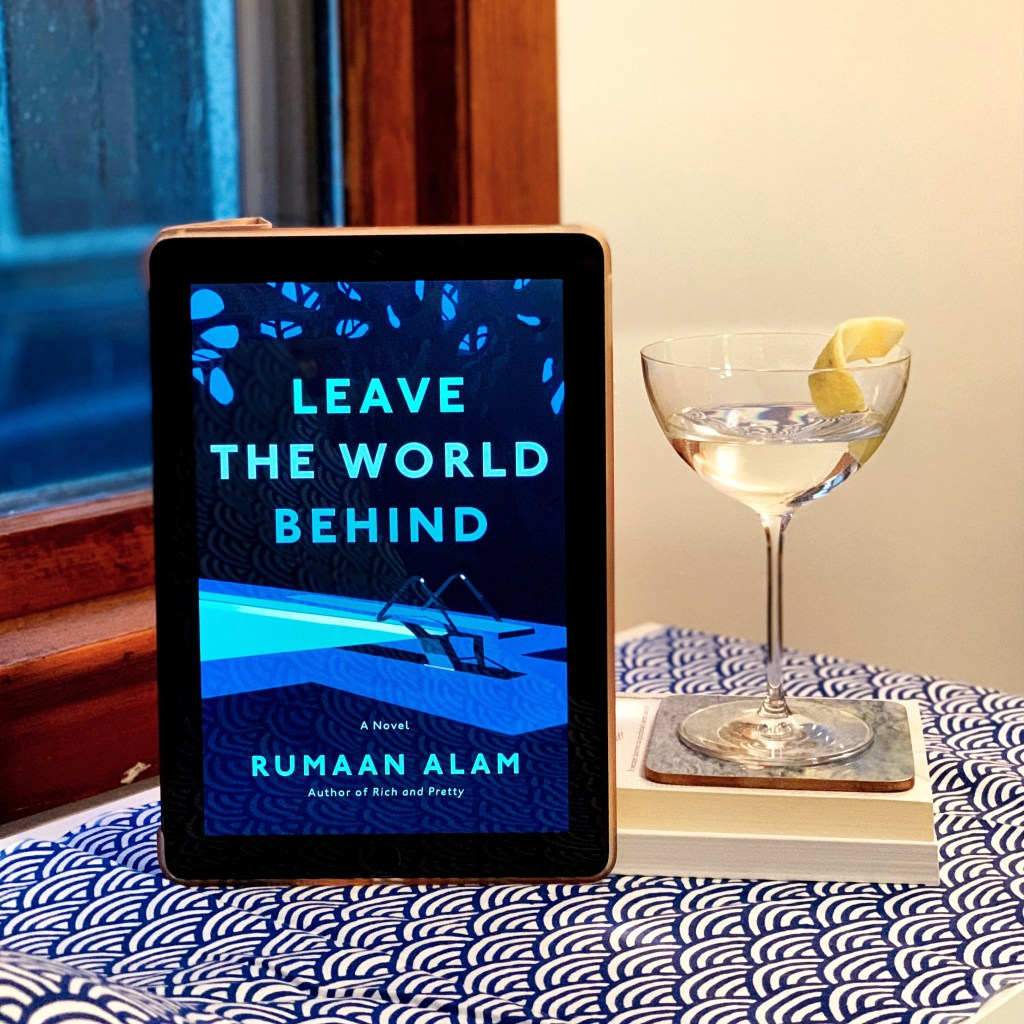
This novel’s pairing is a vodka martini because I suspect the family members are drinking some variation of this cocktail as they nervously wait for news. One of them had bought a bottle of Tito’s from the grocery store, which ends up being served with ice and lemon. A couple rounds of these will definitely help with leaving the world behind.


clarity

ingredients:
2 oz vodka
1 oz dry vermouth
2 dashes orange bitters

garnish:
lemon peel

  1. combine all ingredients in a mixing glass with ice and stir well
  2. strain and serve in a chilled glass
  3. express the lemon peel and garnish the drink with it


Another round, please! 🥂
You might also like:
Ling Ma’s Severance (2018)

Let’s discuss!

Finished the book? What did you think about it? Share your thoughts in the comments section below!
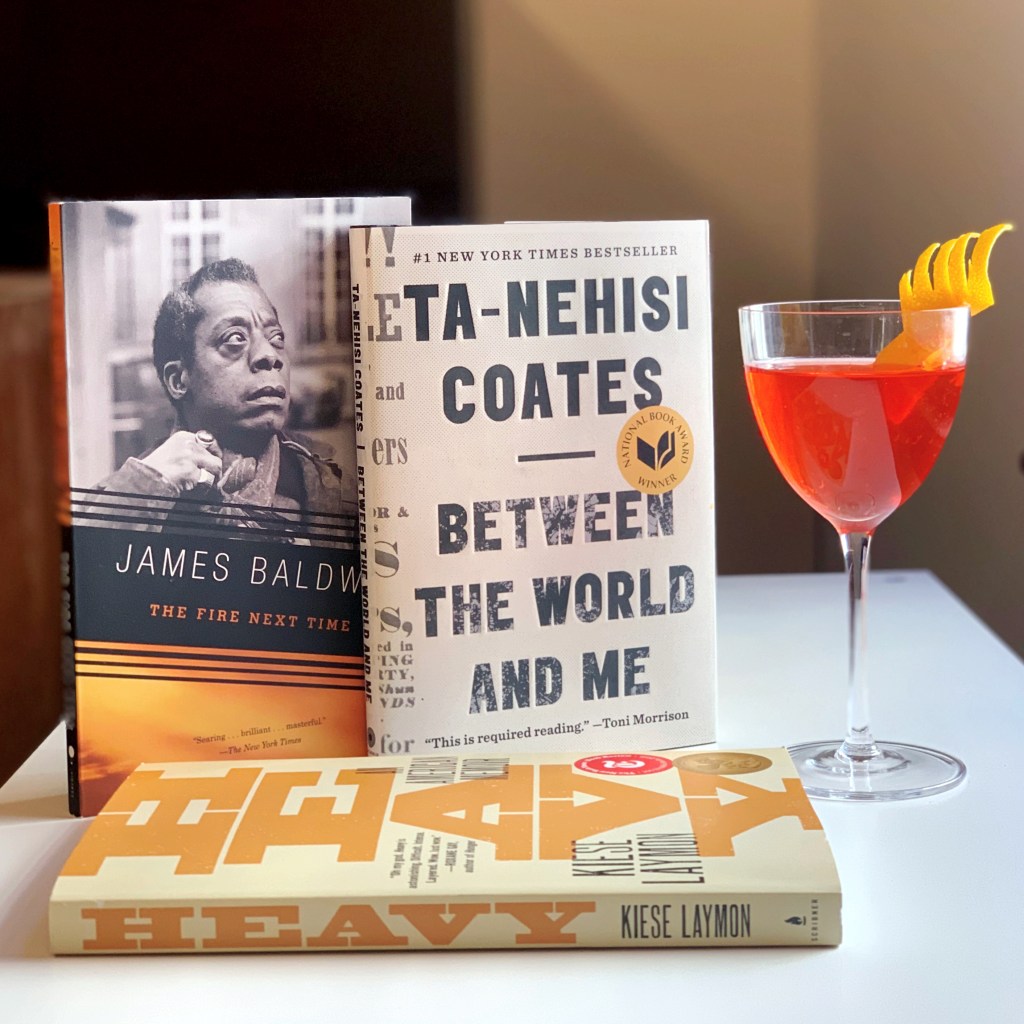
📖The Fire Next Time | 📖Between the World and Me | 📖Heavy: 🍸beauty wisdom abundance

📖: James Baldwin’s The Fire Next Time (1963)
📖: Ta-Nehisi Coates’s Between the World and Me (2015)
📖: Kiese Laymon’s Heavy (2018)
🍸: beauty wisdom abundance

Why this book?

I read all three of these books in quick succession, and the experience of doing so was like having Baldwin, Coates, and Laymon all in the same room talking to each other. 

In these books, all three writers try to unpack the question of what it means to be free as a black man in America. They examine the all ways that white supremacy destroys black bodies — through police brutality, incarceration, violence, poverty, and health disparities. “Black life is cheap,” Coates states, “but in America black bodies are a natural resource of incomparable value.” Our denial of America’s history of exploitation is at the root of what Baldwin calls our country’s “racial nightmare.” Laymon powerfully expresses this when he writes, “No one in my family—and very few folk in this nation—has any desire to reckon with the weight of where we’ve been, which means no one in my family—and very few folk in this nation—wants to be free.”

It feels devastating but urgent to read Baldwin’s observations on race and know that they remain as timely as ever. Coates’ letter to his son felt like a really powerful contemporary extension of the sentiments that Baldwin relayed in his own letter to his nephew in 1962. And I especially loved the intimacy and rawness of Laymon’s memoir, in the way that he uncovers his fraught relationship with his body and family, showing us how deeply embedded the effects of racism are in the personal sphere as they are in the political.

Aside from the searing social critique, each book provides a beautiful portrait of its respective artist. All three men reflect on the beauty, wisdom, or abundance they see as part of their black identity, and how that has helped them to not only survive, but also fuel their writing. These are among the most impactful books I’ve read this year, and I’ll be sure to revisit them often. I highly recommend prioritizing them if you haven’t read them yet!


Why this drink?

Because I think these three books are really amazing companions works, I’m pairing them with the Old Pal cocktail, which is made of only 3 ingredients, all in equal measure.


beauty wisdom abundance

ingredients:
1 oz rye
1 oz Campari
1 oz dry vermouth

garnish:
orange peel

  1. stir all ingredients in a mixing glass with ice, until chilled
  2. strain into a chilled glass
  3. garnish with orange peel

Another round, please! 🥂
You might also like:
Saeed Jones’s How We Fight for Our Lives (2019)

Let’s discuss!

Finished the book? What did you think about it? Share your thoughts in the comments section below!

📖Big Friendship: 🍸ward 8

📖: Aminatou Sow & Ann Friedman’s Big Friendship (2020)
🍸: ward 8

Why this book?

Oddly, the pandemic has made me feel closer to some of my friends who live the farthest away. We’ve started a new ritual where we designate a specific day of the week to check in with each other via text. It is a small gesture, but these weekly updates remind me of the precious connection that we have — something that I want to be more intentional about holding closer to me as I get older.

In thinking about my friends, this book felt like both a delightful celebration and helpful reminder of the necessary effort it takes to be present in each others’ lives. Sow and Friedman’s vulnerable account of their own friendship, supported by interviews and social science research, normalizes the fact that friendships ARE worth fighting for, just like marriages and familial relationships. (And when friendships end, they can feel just as painful as a breakup.) While sharing joyful experiences allow us to build bonds, addressing the conflicting and uncomfortable parts of our friendships are equally essential to fortifying them.

This idea feels a lot like common sense, yet it’s so often hard to act on it. By discussing how they’ve renewed their own friendship, Sow and Friedman show us an example of how we can do it too. 

This pandemic has been a wake-up call to pay attention to what’s most important, so the release of Big Friendship this year felt very timely — especially since it also touches on the challenges of interracial friendships. It’s made me think about reaching out more (digitally), until I can give my friends the biggest hug ever for their big friendship…IRL! 🧸🤗💖


Why this drink?

I’m pairing this book with Chad Arnholt’s spin on the Ward 8 cocktail, which originated in Boston. I went to school and started my post grad career in the Boston area, where I met the people who remain my closest friends today, so this drink is for them! 🥂


ward 8 (by Chad Arnholt)

ingredients:
1.75 oz rye
0.5 oz pomegranate grenadine
0.5 oz lemon juice
0.25 oz freshly squeezed orange juice 

garnish:
orange peel

  1. to make the pomegranate grenadine, mix equal parts pomegranate juice and sugar and bring to a boil and let cool
  2. combine all ingredients in a shaker, and shake with ice
  3. serve in a chilled glass and garnish with orange peel


Another round, please! 🥂
You might also like:
Zadie Smith’s Swing Time (2016)

Let’s discuss!

Finished the book? What did you think about it? Share your thoughts in the comments section below!

And check out this book excerpt and review to learn more about Big Friendship:

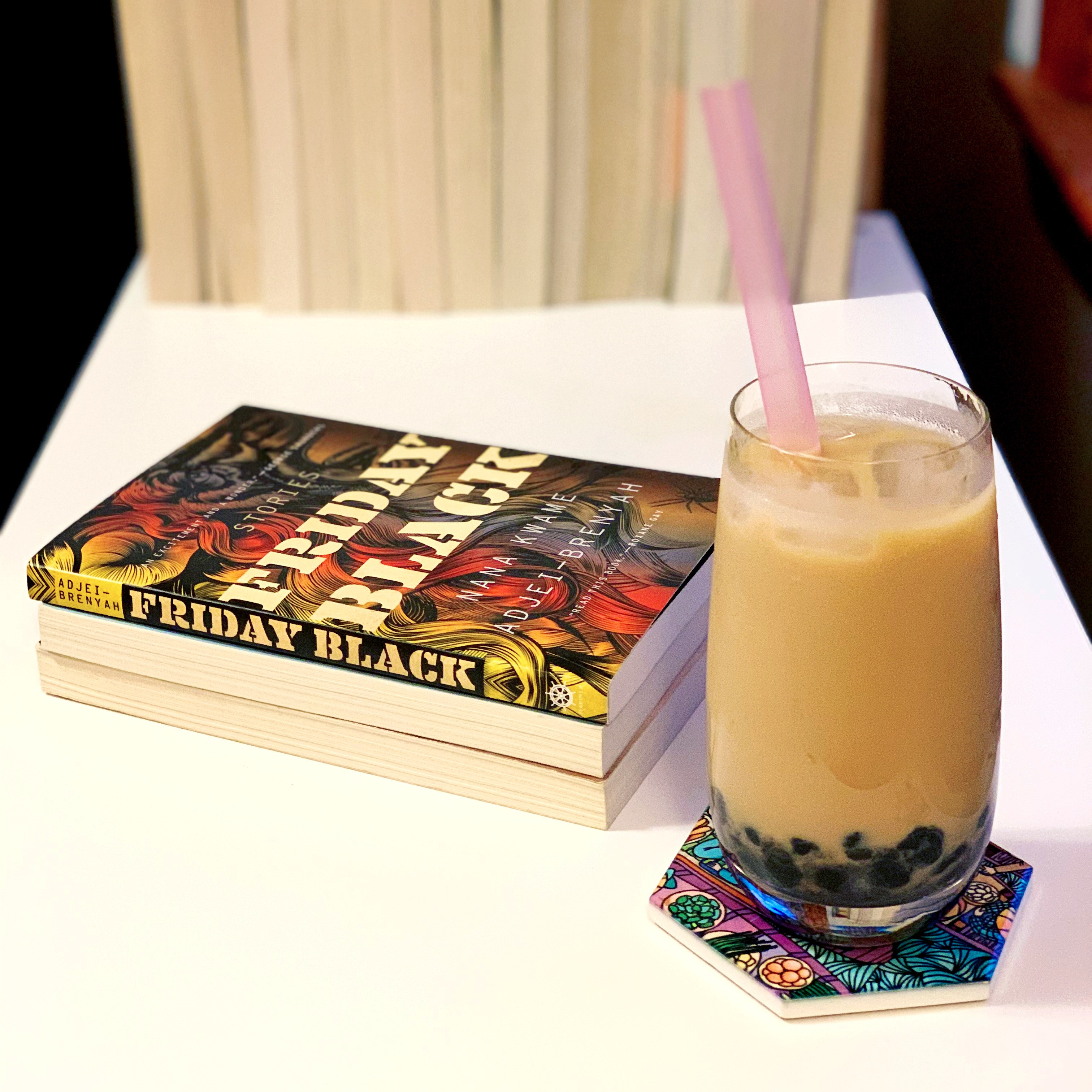
📖Friday Black: 🍸bubble jacket

📖: Nana Kwame Adjei-Brenyah’s Friday Black (2018)
🍸: bubble jacket

Why this book?

Today is Black Friday, and if there’s only one book you buy today, it should be Friday Black. This is one of the most daring and moving short story collections I have read.

Reading Adjei-Brenyah’s collection is like walking through a funhouse full of mirrors where you might feel amused, surprised, confused, then terrified. He uses satire, dark humor, dystopia, magical realism, and sci-fi to distort the details of our reality to reflect the gruesome racist and capitalist systems that shape it.

Each surreal story has sharp observations of human behavior and motivations, which kept me hooked throughout the book. There are tales about a world where genetically modified children are raised, a girl who lives in a time loop with nuclear explosions, and a West World-like theme park where people can pay to commit racial crimes on actors. Topic-wise, it’s not a light read, but I raced through the entire book because I was so captivated by the writer’s craft and creativity. I cannot wait to see what Adjei-Brenyah publishes next!


Why this drink?

I’m pairing this book with a spiked brown sugar boba tea recipe as a reference to the titular story, in which Black Friday shoppers trample over each other to buy branded jackets — a too-real depiction of the destructive side of consumerism. 


🛒📚 Speaking of shopping…if you are buying books this weekend, check out my newly launched Bookshop page at bookshop.org/shop/mixaphoria (link in bio), where you can support independent bookstores AND get FREE SHIPPING through Cyber Monday, 11/30. I curated my lists based on cocktail flavor profile and moods, so you can pick out your next read based on your drink preferences 🤓 Happy weekend 🥂

bubble jacket

ingredients:
1 oz black spiced rum
1 cup strongly brewed black tea
milk, to taste
1/3 cup store-bought boba pearls 
1/4 cup brown sugar
1/3 cup water

  1. cook boba pearls based on packaging instructions. 
  2. in a separate small pot, bring sugar and water to a boil. add boba, and let the mixture simmer over low heat, until it turns into a thick syrup.
  3. in your glass, add the pearls, then ice, rum, tea, and as much milk as you’d like. stir well and serve with a straw.

Another round, please! 🥂
You might also like:
Charles Yu’s Sorry Please Thank You (2012)

Let’s discuss!

Finished the book? What did you think about it? Share your thoughts in the comments section below!
And check out these reviews to learn more about the book:

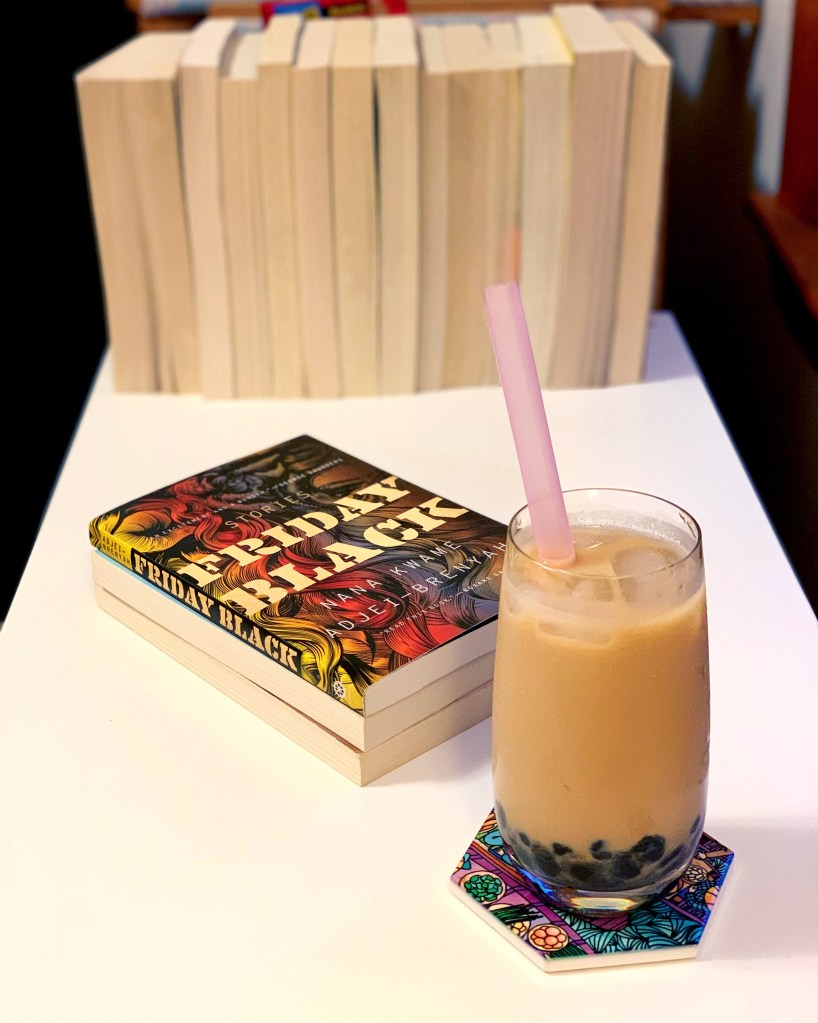
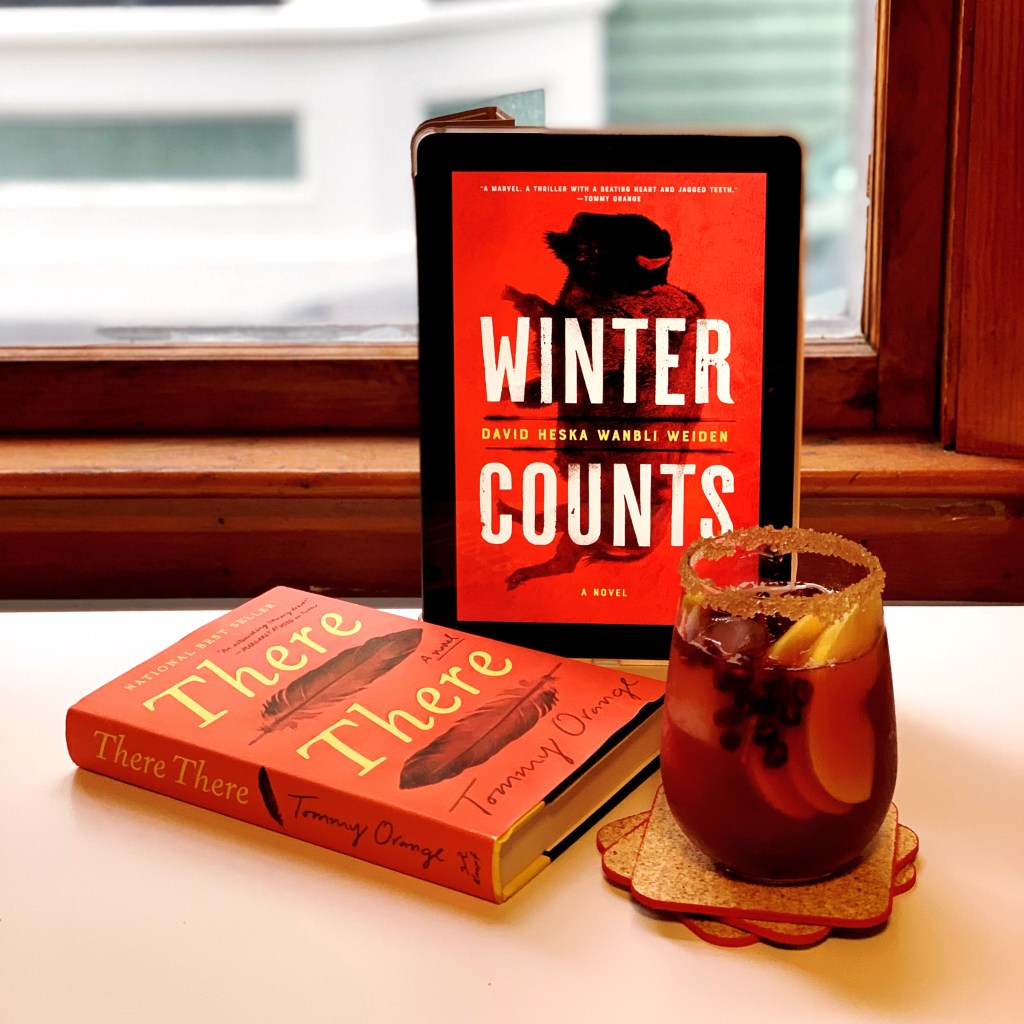
📖There There & Winter Counts:🍸apple pomegranate autumn punch

📖: Tommy Orange’s There There (2018)
📖: David Heska Wanbli Weiden’s Winter Counts (2020)
🍸: apple pomegranate autumn punch

How are you celebrating Thanksgiving this year?

While some of us may be celebrating Thanksgiving today, it’s also important to acknowledge that it is National Day of Mourning for some Indigenous Peoples, such as those who are a part of the United American Indians of New England, for whom “Thanksgiving day is a reminder of the genocide of millions of Native people, the theft of Native lands, and the relentless assault on Native culture. Participants in National Day of Mourning honor Native ancestors and the struggles of Native peoples to survive today. It is a day of remembrance and spiritual connection as well as a protest of the racism and oppression which Native Americans continue to experience.”
.
UAINE will be live-streaming the 51st Annual National Day of Mourning today at 12PM EST at www.uaine.org. On this site, there’s a list of other things we can do to support Indigenous Peoples not only today, but every day of the year – from donations to climate advocacy.
.
If you do gather for Thanksgiving, UAINE suggests doing a reading before your meal about the truth behind the first Thanksgiving, recommending Matthew Hughey’s article “ON THANKSGIVING: WHY MYTHS MATTER.” UAINE also recommends the books OUR HISTORY IS THE FUTURE by Nick Estes or David Stannard’s AMERICAN HOLOCAUST: COLUMBUS & THE CONQUEST OF THE NEW WORLD.
.
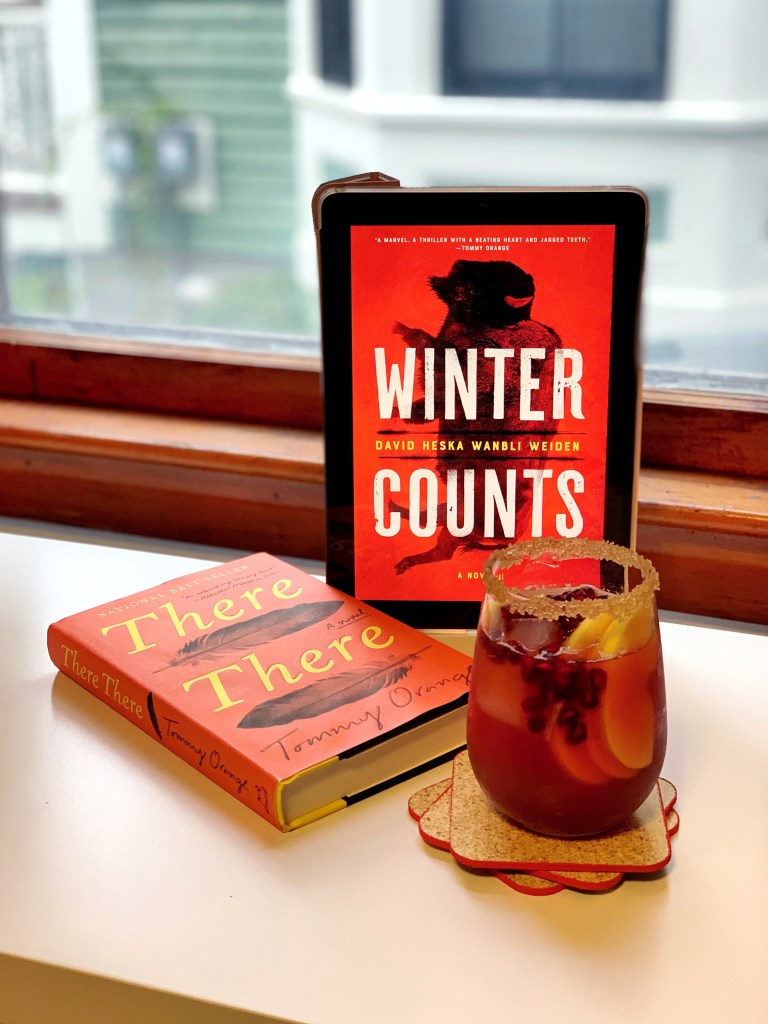
Featured in my photo are Tommy Orange’s stunningly moving novel There There, and Winter Counts, a new crime novel by David Heska Wanbli Weiden. Both are excellent #ownvoices stories on the contemporary experiences of people from several Indigenous Nations. I can’t recommend them enough – especially since November is also #NativeAmericanHeritageMonth.
.
However you’ll observe today, I hope you are staying safe and feeling renewed by and connected to your loved ones — in a socially distant or virtual way!


*Note: The beverage featured here is adapted from the blog HOW SWEEET EATS’s Sparkling Pomegranate Cider Punch recipe.


apple pomegranate autumn punch

ingredients:
1.5 oz bourbon (optional)
3 oz apple cider
2 oz pomegranate juice
2 oz ginger beer
1 tsp autumn syrup, to taste*

for garnish:
apple slices, pomegranate seeds, cinnamon stick, and a cinnamon sugar rim

  1. rim your glass with the autumn syrup and coat it with a cinnamon sugar mix
  2. combine all ingredients with ice and stir well (You can add bourbon, if desired, but it’s tasty on its own, without the spirit.)
  3. strain out the ice and serve in glass with fresh ice
  4. garnish with apple slices, pomegranate seeds, and a cinnamon stick

*How to make the autumn syrup:
Heat these ingredients in a small saucepan on the stove, and stir until just boiling: 1 part brown sugar, 1 part water, pinch of nutmeg and cinnamon, star anise, and a few pieces of orange rind. Remove from heat and let cool before adding to the punch mixture.


Let’s discuss!

Finished the books? What did you think about it? Share your thoughts in the comments section below!

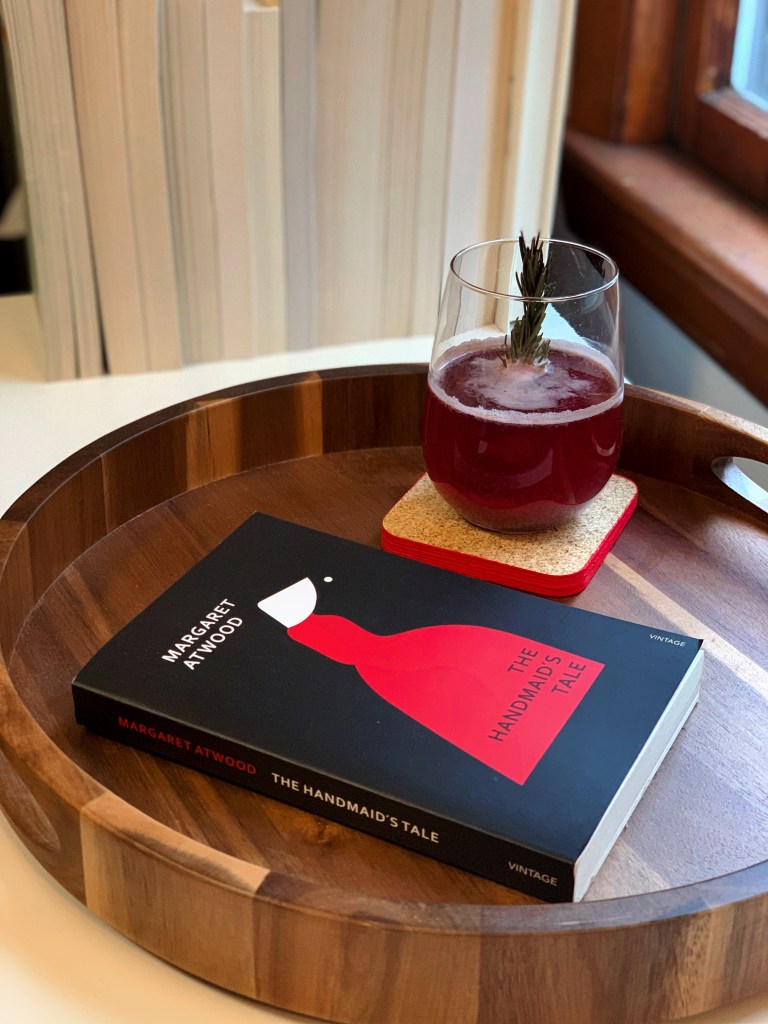
📖The Handmaid’s Tale: 🍸mayday

📖: Margaret Atwood’s The Handmaid’s Tale (1985)
🍸: mayday

Why this book?

With Halloween around the corner (and Election Day shortly after), what I’m really scared of is living in a country where people’s lives aren’t protected or represented, especially those who have been historically marginalized.

This week’s news included the Supreme Court confirmation of Amy Coney Barrett. I’m worried about what will happen to our reproductive rights and access to healthcare (and immigration and racial equity and LGBTQ+ rights and the list goes on…). Atwood’s dystopian world of Gilead has always felt bleak and foreboding, but it feels especially terrifying now. Are we already living in our own dystopia?

What makes Gilead really scary is the amount of complicity and corruption of power it takes to create such a world. The novel makes me reflect on how we, as individuals, may be (knowingly or unknowingly) complicit in upholding structural injustices and exploitation, through both our actions or inactions. How can we best resist? While that depends for each of us personally, it’s important to remember that no act of resistance is too small. It all adds up. Just like our votes in this critical election. Will you join in early voting and encourage others to do so too?

Despite these somber musings, I think it’s still important for us to find rest, comfort, and joy however we can during these tough times. While this is not a “usual” review, I still hope you’ll enjoy the pairing since many of us won’t socialize in person this Halloween (which I normally would have loved to celebrate with friends). Stay safe, and take good care of yourself!


Why this drink?

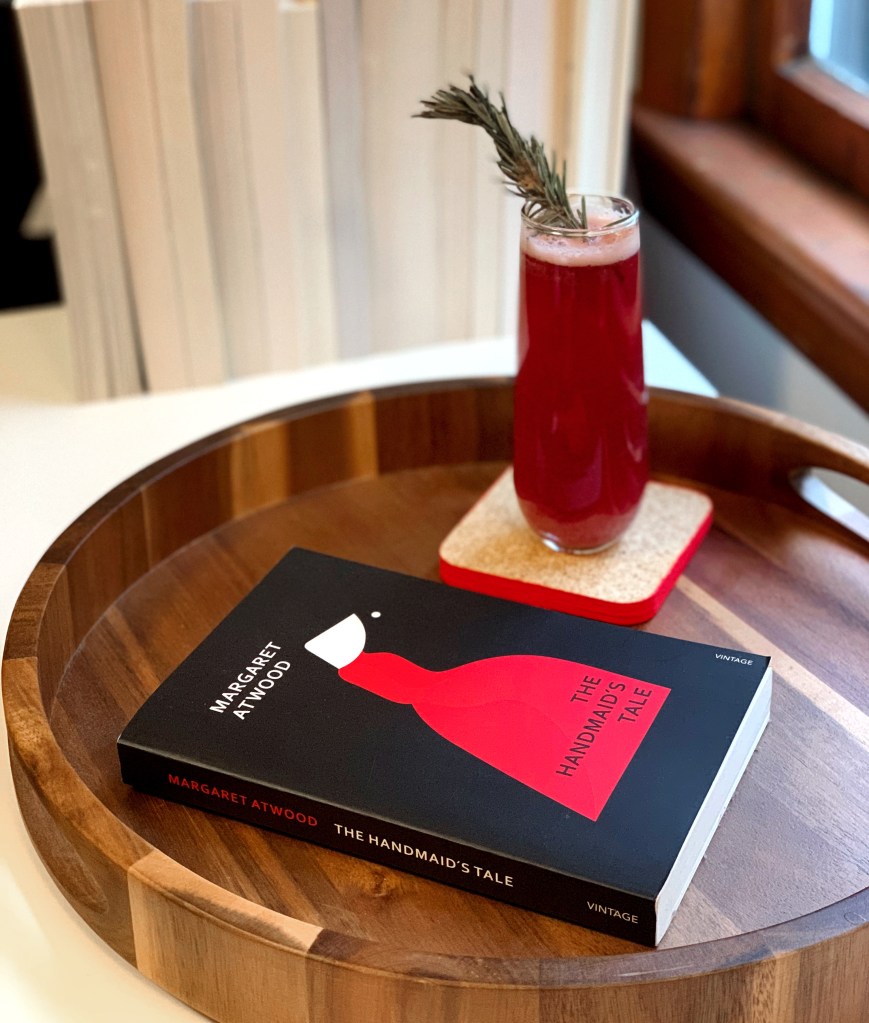
For this pairing, I chose a drink that had the same deep crimson color as the handmaid’s robes, and the name Mayday comes from the handmaids’ underground network of resisters.

This drink is the Pomegranate Blood Orange Shandy recipe by Ashley Rose Conway. For the drink I made here, I slightly tweaked the proportions — you can see my substitutions and modifications in the tweaked recipe below.


mayday

ingredients:
6 oz blood orange shandy beer
2 oz ginger beer
3 oz pomegranate juice
1 oz blood orange or orange juice, freshly squeezed

for garnish:
rosemary sprig

  1. combine all ingredients except the shandy beer and stir well
  2. top off with the beer
  3. serve in a chilled glass
  4. garnish with a sprig of rosemary (smack the rosemary before serving to release its oils and aroma)

Quarantine substitutions:
*The original recipe calls for wheat beer, but I used a blood orange shandy instead. As long as the beer is wheat based, it should be good.
*The original recipe calls for blood orange juice, but I used freshly squeezed regular navel orange juice instead and it turned out great.
*I changed the proportions by adding more pomegranate juice and using less beer. The original recipe called for 8 oz of beer and only 1 oz of pom juice.


Another round, please! 🥂

You might also like:
Leni Zumas’ Red Clocks (2018)

Let’s discuss!

Finished the book? What did you think about it? Share your thoughts in the comments section below!
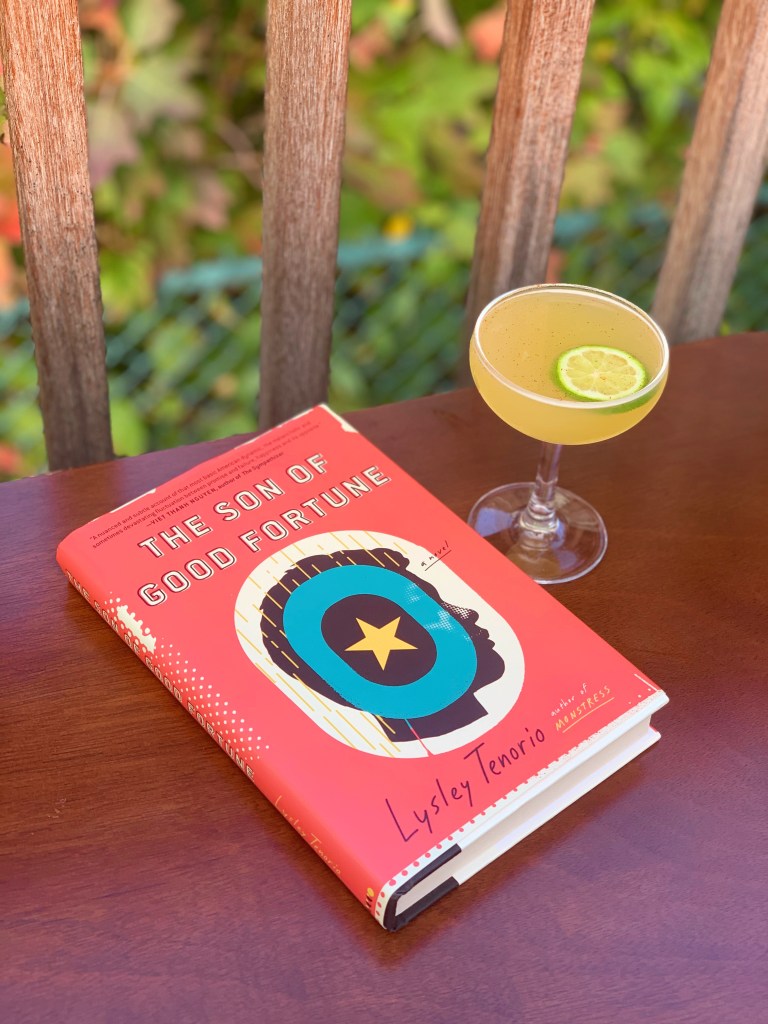
📖The Son of Good Fortune: 🍸hello city

📖: Lysley Tenorio’s The Son of Good Fortune (2020)
🍸: hello city

Why this book?

“I’m not here, I’m not really here.” Excel repeats this mantra to himself to escape from the present and become invisible. From an early age, Excel has learned that he and his mother Maxima are undocumented immigrants from the Philippines.

With his secrecy and fear, teenaged Excel feels like he can only go so far. He works at a local pizza shop, lives at home with Maxima instead of going to college, and spends most nights on the roof of their apartment alone. He lives by a freeway that has two Targets on either side, and one day, he walks from one storefront to the other, counting the 1,084 steps he took to “just to get to a place exactly the same as where [he] started.”

So when Excel sees an opportunity to move to Hello City with his new girlfriend, he takes it. He leaves Maxima behind without looking back, but circumstances force him to return to reconcile with his mother and reflect on the choices they’ve made and will continue to make as a family.

For me, this poignant novel felt like a modern spin on “The Prodigal Son,” with a focus on what it means to belong, be seen, and self-determine one’s future in a country where being undocumented is criminalized. Lysley Tenorio’s prose is clear and straightforward, and he balances the gravitas of this story with quirky details, wry humor, and a curious prologue that draws you in.

The portrayal of Excel and Maxima’s relationship was especially moving for me because Maxima — with her resourcefulness, sacrifices, and conviction — reminded me of my own mom, who immigrated to the US as a single parent. Maxima is such a multi-layered and unique character, and I still wanted to learn more about her by the time I reached the last page.

October is also Filipino American History Month, so I highly recommend picking up this novel and then following it up with Lysley Tenorio’s debut book Monstress if you haven’t yet!


Why this drink?

For this pairing, I chose a recipe with calamansi as a nod to Maxima and Excel’s Filipino roots. (This recipe comes from the now-closed Krystal’s Cafe 81 in NYC.)


hello city

ingredients:
1.5 oz mezcal
0.5 oz Cointreau
1 oz lime juice
1 oz calamansi juice
0.5 oz agave syrup
splash of orange juice

for garnish:
lime or calamansi wheel

  1. combine all other ingredients in a shaker, and shake with ice
  2. serve with ice
  3. garnish with a lime or calamansi wheel

Quarantine substitutions:
*If you don’t have any calamansi juice, you can sub it out for freshly squeezed orange juice.
*If you don’t have any agave syrup, use a simple or demerara syrup instead.


Another round, please! 🥂

You might also like:
Mohsin Hamid’s Exit West (2017)

Let’s discuss!

Finished the book? What did you think about it? Share your thoughts in the comments section below!
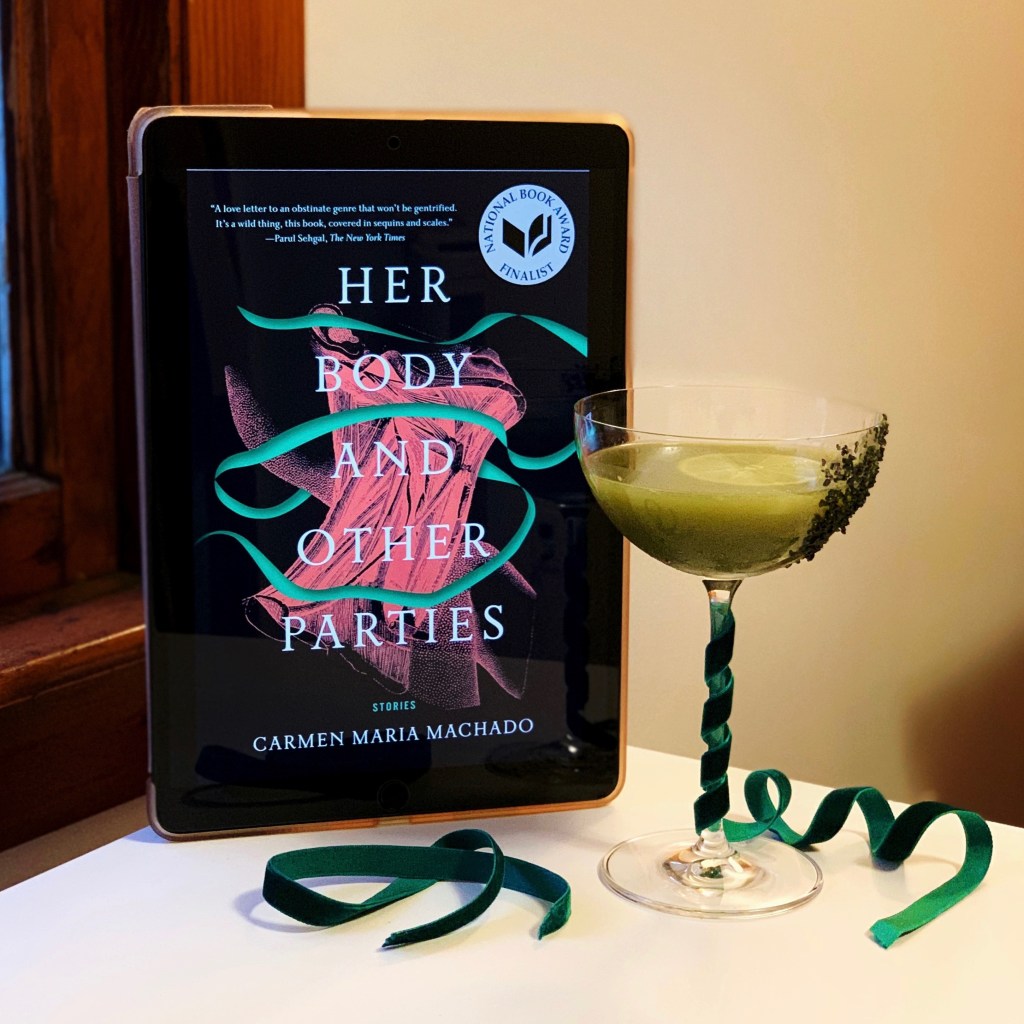
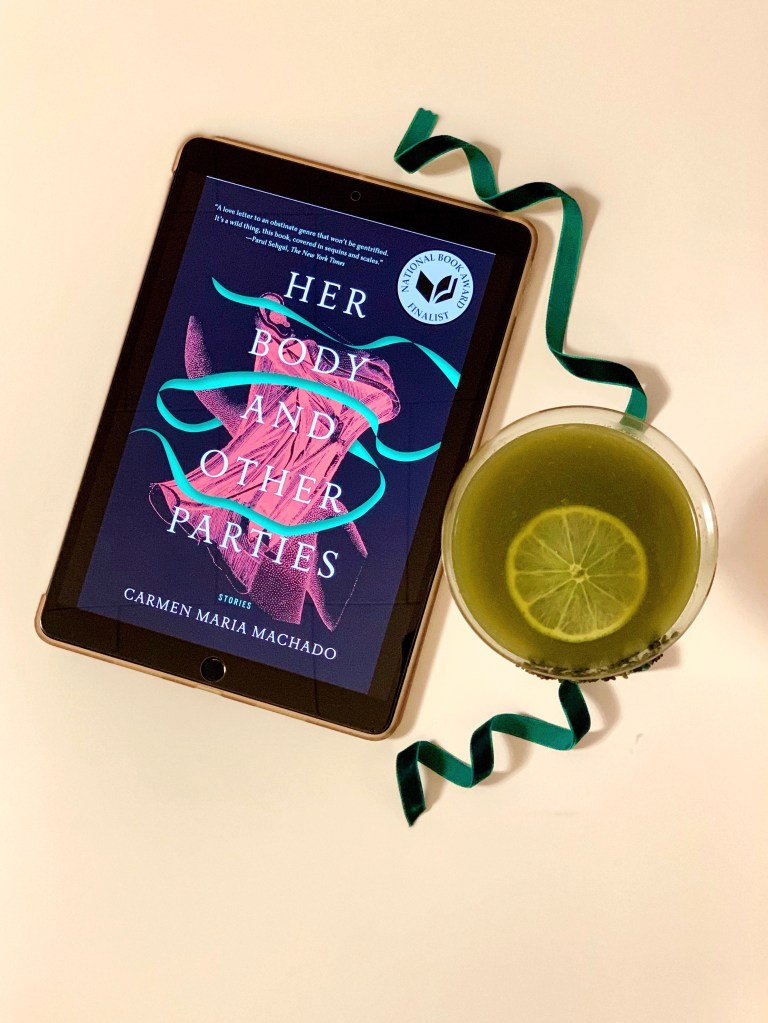
📖Her Body and Other Parties: 🍸the green ribbon

📖: Carmen Maria Machado’s Her Body and Other Parties (2017)
🍸: the green ribbon

Why this book?

Today is the last day of Latinx Heritage Month, and since it’s also spooky season 👻, I’m featuring Carmen Maria Machado’s debut collection of eight short stories that portray female sexuality, desire, power, and passion through a mix of both real and surreal horrors.

From an isolated artist residency colony in the woods to a remote island during a global pandemic (TOO real 😰), the varied settings for these stories alone make them creepy — not to mention the appearances of ghosts, a hook-handed killer, and faded women who reside in the seams of prom dresses! What could make these tales even scarier? So much of this collection seems to be about what can haunt us — whether it’s shame, guilt, self-hate, or trauma — and how much of these experiences are tied to the control, stigmatization, and erasure of women’s bodies in contemporary culture.

What I liked most about this book is Machado’s bold experimentation with different forms of storytelling. She weaves together pop culture horror tropes, folk tales, Gothic literary styles, and satire with unconventional narrative structures to create dark and erotic stories, sometimes with a cheeky edge. For example, one story is told completely through a series of episode synopses from a LAW & ORDER: SVU-like show, and in another, she adds stage directions, instructing readers to use specific voices for each character’s dialogue. In another instance, she even asks you, the reader, to “give a paring knife to the listeners and ask them to cut the tender flap of skin between your index finger and thumb” to recreate the sound and feeling of an obstetric procedure mentioned in the story. Yikes, that gave me chills!


Why this drink?

There was something intriguing and surprising about each story, so I gobbled up the entire collection like Halloween treats 🎃 This pairing is a reference to the opening story “The Husband Stitch”  — a clever retelling of “The Green Ribbon,” which comes from a scary old French tale that was later popularized by Washington Irving in 1824 and adapted for children by Alvin Schwartz in 1984. 😱 If you haven’t heard “The Green Ribbon” yet, I’d recommend reading Machado’s version first!


the green ribbon

ingredients:
1.5 oz mezcal
1 oz lime juice
0.5 oz triple sec
0.25 oz demerara sugar syrup
0.25 tsp matcha

for garnish:
black lava salt and lime wheel

  1. combine all other ingredients in a shaker, and shake with ice
  2. rim glass with black salt
  3. serve with ice, if desired
  4. garnish with lime wheel

Another round, please! 🥂

You might also like:
Roxane Gay’s Difficult Women (2017)

Let’s discuss!

Finished the book? What did you think about it? Share your thoughts in the comments section below!
📖The Taste of Sugar: 🍸strawberry girl & 🍸 coffee farmer

📖: Marisel Vera’s The Taste of Sugar (2020)
🍸: strawberry girl
🍸: coffee farmer

Why this book?

The Taste of Sugar is an exquisite novel that spans three generations of a coffee farming family in Puerto Rico, from 1825 to 1902. It reminded me a bit of Min Jin Lee’s Pachinko, in the way that the story is multi-generational in scope, with a focus on the themes of emigration, inequality, war, exile, exploitation, and family.

At the heart of the novel is a love story between Valentina Sanchez and her husband Vicente Vega. We follow them through the joys and challenges of raising a family and cultivating a coffee farm in the mountains. Soon, the Spanish-American War, US invasion of Puerto Rico, and the San Ciriaco Hurricane bring major changes, prompting them to emigrate – along with over five thousand other Puerto Ricans – to work on the cane sugar plantations of Hawaii where they hope to gain greater economic opportunity.

In telling this story, Marisel Vera interrupts the flow of her third-person narrative with passages told in the first-person POV, keeping the story fresh and engaging. She includes letters that Valentina exchanges with her sister, along with short monologues from a handful of characters. I sped through the pages, and was sad when I got to the last one! I was deeply moved by the love and resilience of the Vegas’ relationship, and wanted to continue following the story of their family’s life in Hawaii. I highly recommend this book if you want to learn more about Puerto Rican history, which I did not know very much about until I began reading this novel.


Why this drink?

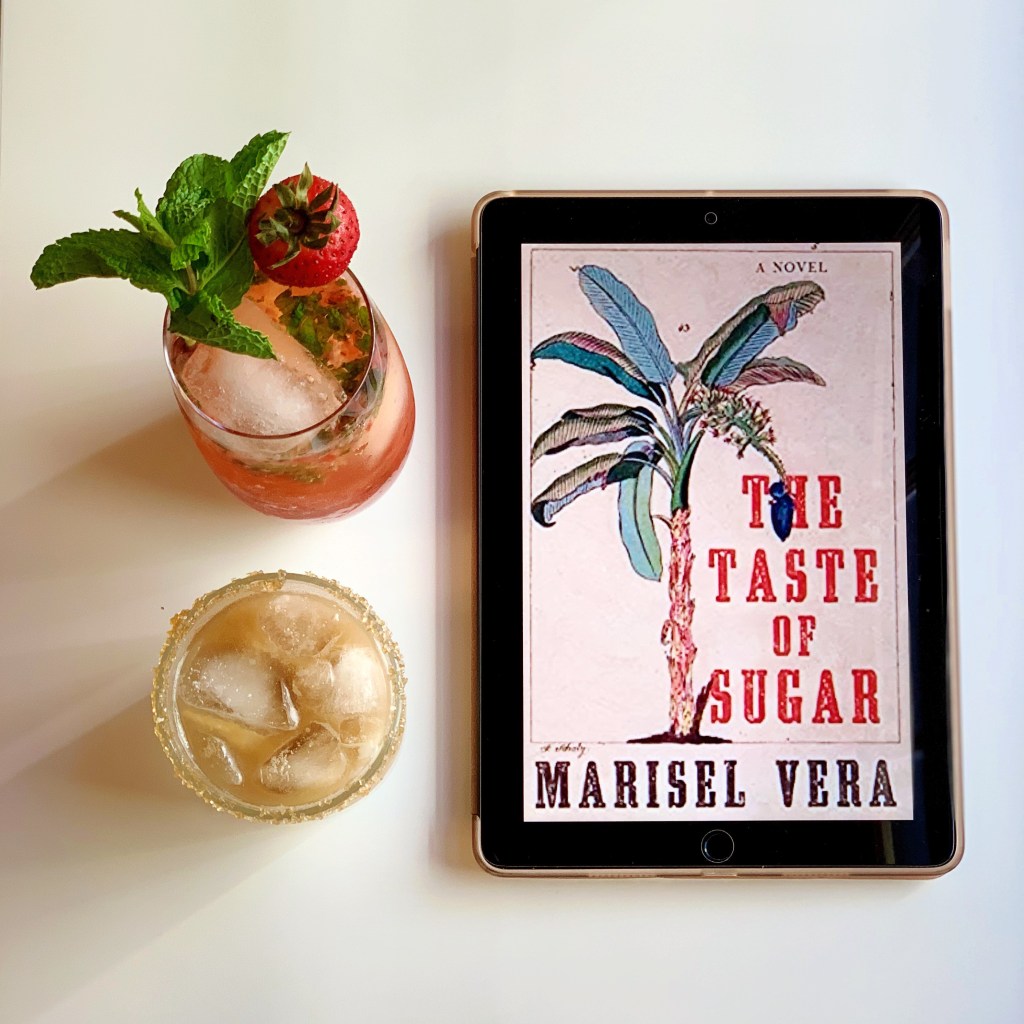
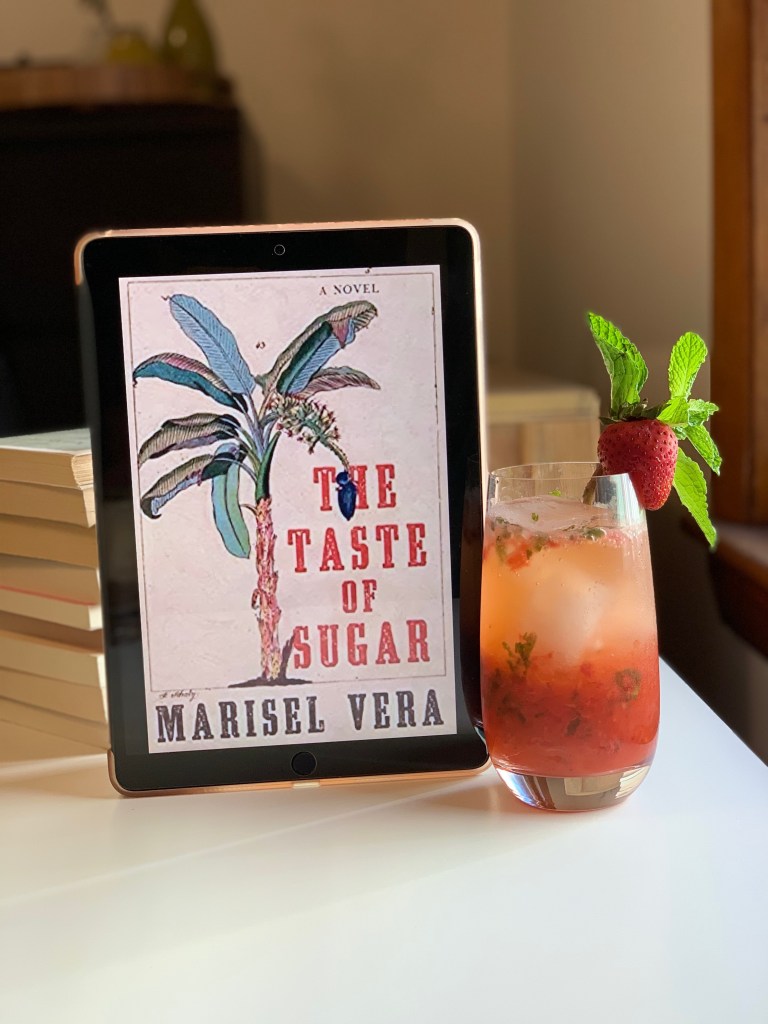
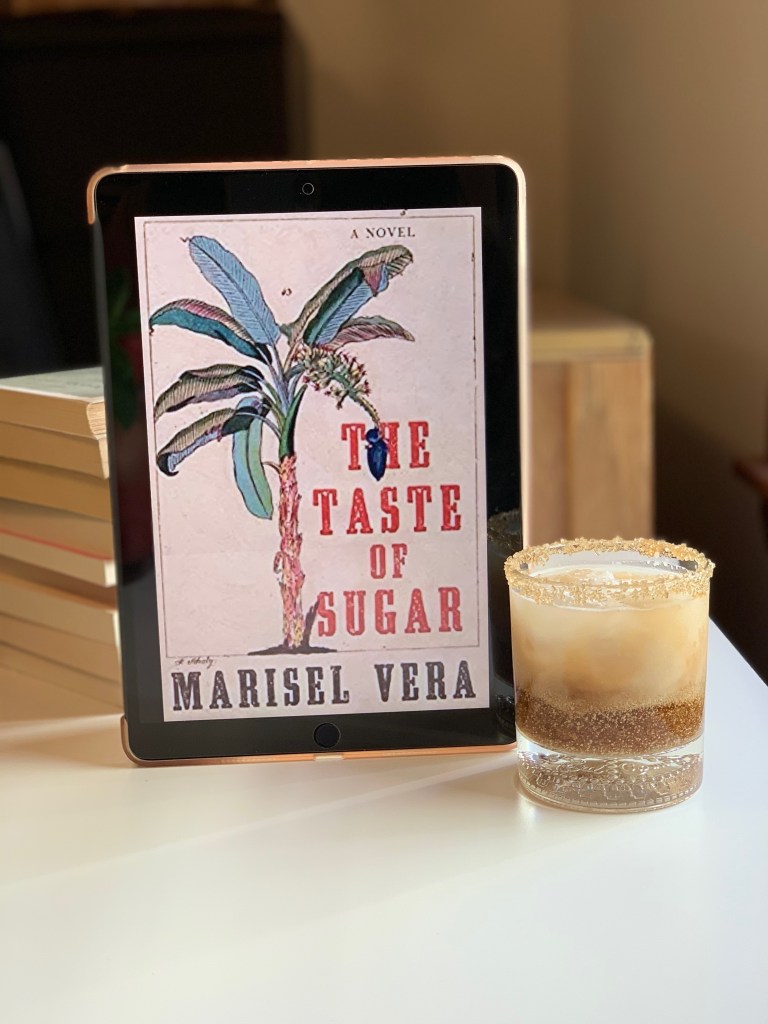
For The Taste of Sugar, I made two drinks: one for Vicente, the coffee farmer, and Valentina, who he affectionately calls his “strawberry girl” (because of the strawberry-scented powder she wore on the night they met). I used cane sugar and rum as a common ingredient in both cocktails, since both prominently appear throughout the novel. Vicente’s drink is adapted from Cafe Correcto con Coco recipe on Liquor.com.


strawberry girl

ingredients:
0.75 oz white rum
0.75 oz black spiced rum
1 oz lime juice
0.5 oz demerara cane sugar syrup
1 – 2 oz seltzer water to top off 
3 strawberries
fresh mint

for garnish:
fresh mint & strawberries

  1. muddle the mint and strawberries in a shaker with a pinch of cane sugar
  2. combine all other ingredients in a shaker, and shake with ice
  3. serve with ice
  4. garnish with strawberry and mint

coffee farmer

ingredients:
0.75 oz black spiced rum
0.75 oz whiskey
1 oz black coffee
0.5 oz demerara cane sugar syrup
1 oz coconut milk

for garnish:
demerara cane sugar

  1. combine all ingredients, except for coconut milk, into a mixing glass, and stir with ice
  2. rim glass with cane sugar
  3. serve mixture in the glass with ice
  4. top off with coconut milk

Another round, please! 🥂

You might also like:
Min Jin Lee’s Pachinko (2017)

Let’s discuss!

Finished the book? What did you think about it? Share your thoughts in the comments section below!
📖Fruit of the Drunken Tree: 🍸the salty fruit

📖: Ingrid Rojas Contreras’s Fruit of the Drunken Tree (2018)
🍸: the salty fruit

Why this book?

Fruit of the Drunken Tree is a novel about two girls growing up in Colombia in the late 80’s-early 90’s. The story alternates between the perspectives of seven-year-old Chula and her family’s new live-in maid Petrona. Both become friends, but as political instability and violence increases in Colombia during Pablo Escobar’s reign, their loyalties to each other become tested.

Much of this story is centered on the act of remembering and forgetting, and making sense of what is real and unreal – all through the lens of childhood. While the subject matter is very heavy, the author’s prose is lyrical and vivid, making many of the details feel very immersive and palpable. I only wished that there were more chapters from Petrona’s POV since most of the book is told in Chula’s voice. Overall, this was a compelling and poignant story about how two girls from two different socioeconomic classes came of age by grappling with the loss of innocence, choice, and home.


Why this drink?

I used Theo Lieberman and Lauren Schell’s Salty Bird Cocktail recipe for this pairing because Chula becomes obsessed with salt once her family flees Colombia as refugees. She would eat salt, wash her hands with salt, and smell it everywhere she goes, to the point where salt was all she could write about in her final letter to Petrona. This novel doesn’t close with a neat, happily-ever-after, but it did evoke emotions that lingered long after I finished the book – just like how the essence of salt stays with Chula.


the salty fruit

ingredients:

0.75 oz Campari
1.5 oz black rum
1.5 oz pineapple juice
0.5 oz lime juice
0.5 oz simple syrup

for garnish:
pinch of salt
dehydrated pineapple

  1. combine all ingredients in a shaker and shake with ice
  2. serve with ice
  3. garnish with a pinch of salt and a piece of dehydrated pineapple

Another round, please! 🥂

You might also like:
Khaled Hosseini’s A Thousand Splendid Suns (2007)

Let’s discuss!

Finished the book? What did you think about it? Share your thoughts in the comments section below!