📖The Lowland:🍸after the rain

📖: Jhumpa Lahiri’s The Lowland (2013)
🍸: after the rain

Why this book?

This is Jhumpa Lahiri’s second novel and fourth book. Like her previous works, this story focuses on the experience of Indian immigrants in America. At the same time, the novel is also about the idealism of youth, rebellion, trauma, and loss. I especially appreciated how The Lowland, unlike Lahiri’s other works, places the protagonists’ story within a broader context of geopolitics, inequality, and revolution, showing how these individuals’ experiences of migration and displacement are inextricably tied to global forces.

The Lowland is a story of two brothers who grow up near a marsh in a small Calcutta neighborhood. Subhash dreams of going to America to study to become a scientist, while Udayan, the more rash and rebellious brother, joins the Naxalite movement, which was known for its radical Maoist politics, violence against authorities, and popularity among college campuses during the 1960s. Then one day in the marshy lowland, the two brothers’ fates diverge.

I love reading Lahiri’s writing because of its deceptive simplicity. Her prose says so much in spite of its restraint and lack of embellishment. Many of the details in her story are just small, intimate, or mundane observations of daily life, like eating cream cheese in a parking lot, finding your wife’s birth control pills, or witnessing fall foliage for the first time in New England. Though seemingly neutral on the surface, these observations are propelled by an undertow of longing, regret, and grief. They accumulate over the course of her storytelling, and before you fully realize the change in tide, you’re washed over by a wave of emotion that has been gaining momentum the whole time.


Why this drink?

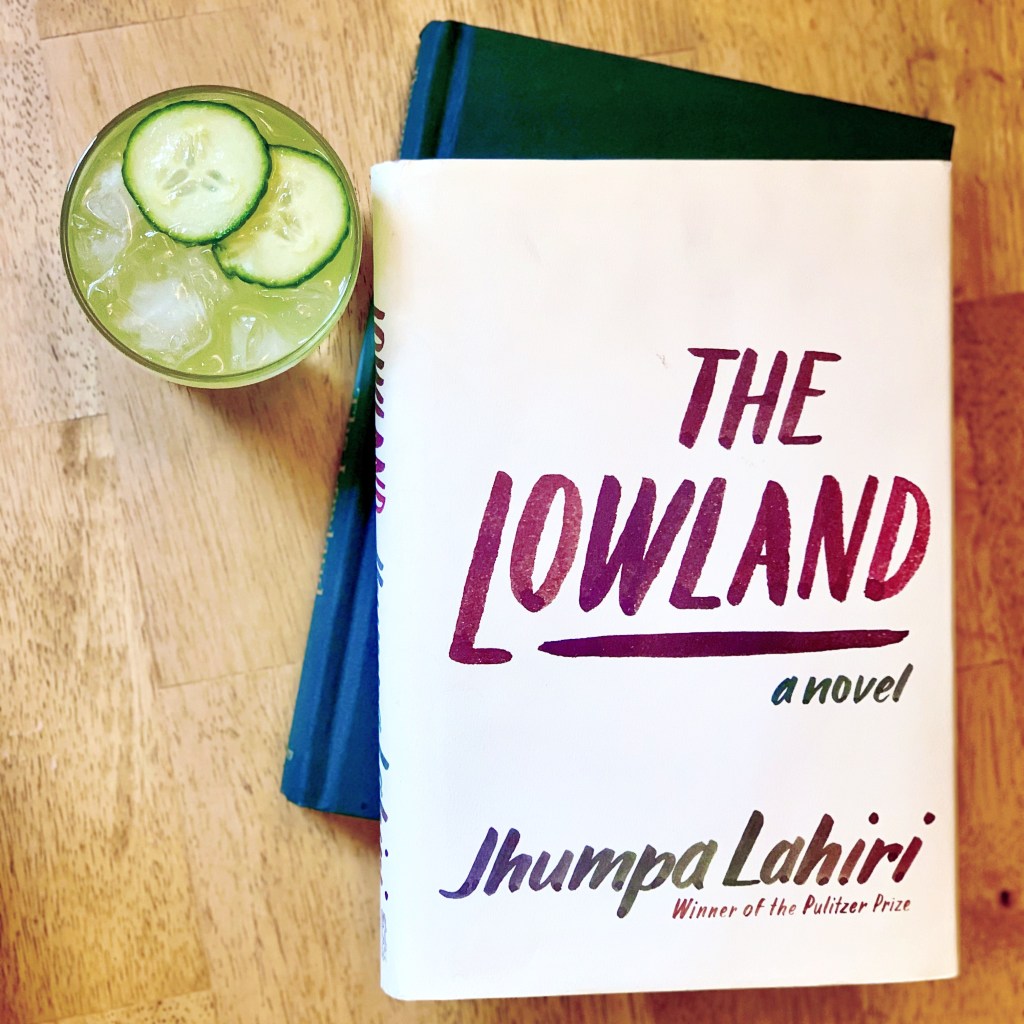
The marshy lowland situated between two ponds is both setting and symbol within the novel. The lowland floods in rainy season and then dries up during the hot months, making the two ponds “at times separate; at other times inseparable,” just like the two brothers who are often mistaken for twins. This drink was chosen for its vegetal taste, like grass and leaves becoming lush after the rain.

Note: This recipe has been adapted from The Up & Up‘s “Bring June Flowers.” Due to availability of ingredients during quarantine, I used green tea instead of jasmine tea leaves that the Bring June Flowers recipe calls for.


after the rain

Ingredients:
1.5 oz vodka
0.5 oz Suze
0.75 oz green tea simple syrup*
0.75 oz lemon juice
3 muddled cucumber slices

for garnish:
cucumber ruffle or slices

  1. muddle cucumber in a shaker
  2. pour all remaining ingredients into shaker, and shake with ice
  3. pour into glass, straining out the muddled cucumber and ice
  4. serve with ice and cucumber garnish

Pro-tips:
*how to make green tea infused simple syrup: Steep green tea in hot water, boiled to a temperature of 180F degrees. Pour white granulated sugar and green tea into a pan (using a 1:1 sugar-to-tea ratio) and heat the mixture on the stove until it starts to bubble. Once tiny bubbles start to appear, immediately take the boiling syrup off the stove and pour it into the into a glass jar. Cover the jar with airtight lid until cool.


Another round, please! 🥂

You might also like:
Khalend Hosseini’s The Kite Runner (2003)

📖Exit West:🍸open door

📖: Mohsin Hamid’s Exit West (2017)
🍸: open door

Why this book?

To cross boundaries in the world of Mohsin Hamid’s Exit West, you need to first find an open door. This is no easy task: while many portals exist, it is uncertain which will actually transport you to a different place. Once you find one, you simply step through the threshold. You might end up in a woman’s bedroom closet in Australia, an abandoned mansion in England, or at a refugee camp in Greece. It doesn’t matter because what’s on the other side appears to be better than what you are leaving behind.

The novel’s main characters, Nadia and Saeed, harbor this hope as they hastily leave their war-torn country through a magic portal. During their journey of exile, they find that (not unsurprisingly) the “doors out, which is to say the doors to richer destinations, were heavily guarded, but the doors in, the doors from poorer places, were mostly left unsecured.”

To illustrate this, Hamid intersperses the couple’s story with vignettes of other individuals who move through “doors out” and “doors in.” In doing so, the author expands the novel beyond a story that is just about refugees to one that is also about the implications of global mass migration. It makes a statement about how “migrants” and “natives” see and treat each other upon arrival, once boundaries have been crossed and blurred.

What I love so much about this book is how marvelous, yet understated the magical realism is, because the book is not so much about the fantastic doors, how they work, or how it feels to move through that mode of transport. It is more about what happens before and after the threshold has been crossed. It is about how the choice to grant or deny entry to migrants says a lot more about the gatekeepers than about those who seek to step through.


Why this drink?

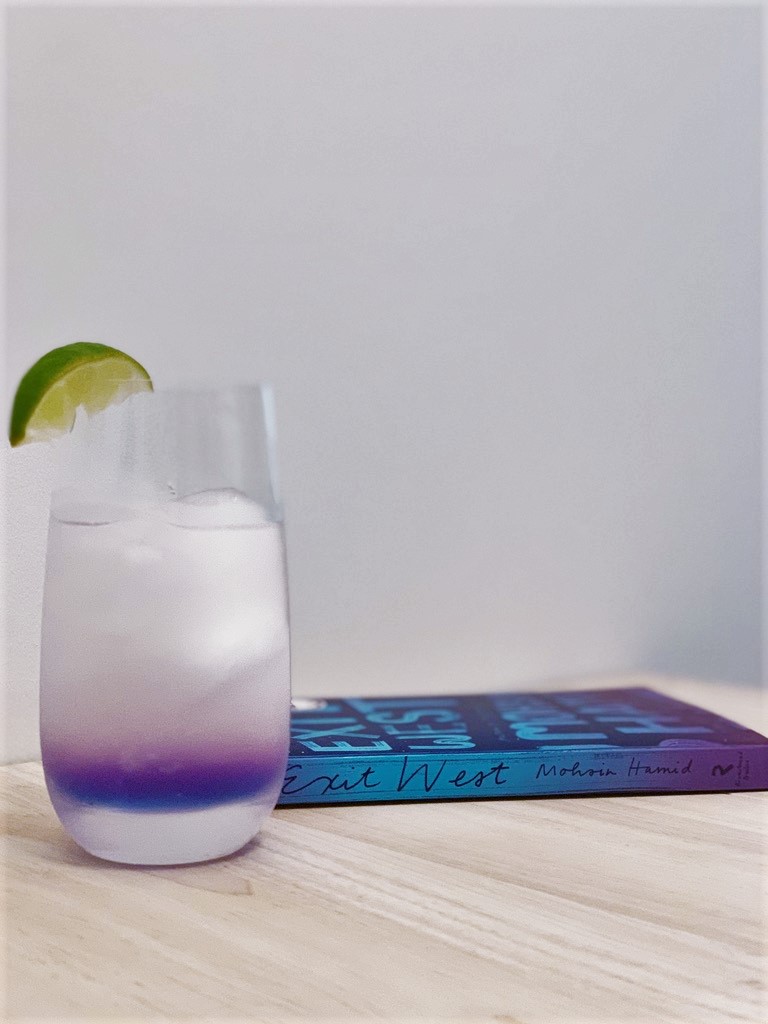
Like the open portals in the novel, this drink is magical! The secret is the butterfly pea flower infused syrup, which changes from blue to purple once we layer on the spirits and lime juice. Also, the book cover is eye-catching — so the drink should be, too.


open door

Ingredients:
1.5 oz mezcal 
0.5 oz Italicus 
0.75 oz fresh lime juice 
2.5 oz still or sparkling water
1 oz butterfly pea flower infused simple syrup*

for garnish:
lime wedge

  1. combine and stir spirits in a mixing glass
  2. combine and stir lime juice and water in a separate glass
  3. pour butterfly pea flower syrup into a highball glass, and add ice
  4. add the alcohol mixture over the syrup and ice, then top with limeade
  5. garnish with lime wedge

Pro-tips:
**how to make butterfly pea flower infused simple syrup: Steep butterfly pea flowers in boiling water and wait until cool. Pour white granulated sugar and butterfly pea flower infused water into a pan (using a 2:1 sugar-to-water ratio) and heat the mixture on the stove until it starts to bubble. Once tiny bubbles start to appear, immediately take the boiling syrup off the stove and pour it into the into a glass jar. Cover the jar with airtight lid until cool.


Another round, please! 🥂

You might also like:
Junot Díaz’s The Brief Wondrous Life of Oscar Wao (2007)

📖Red Clocks:🍸Eivør’s ice

📖: Leni Zumas’ Red Clocks (2018)
🍸: Eivør’s ice

Why this book?

To wrap up Women’s History Month, we’d like to say THANK YOU to all of the women who have fought — and are still fighting — for gender equality and equity. Sadly, women’s reproductive rights are still in contention today, despite all the progress made in the last few decades.

This week’s book recommendation is Red Clocks, which imagines a not-so-far dystopian future where abortion and IVF are banned and single parents are no longer allowed to adopt. Much of the novel is confined to the inner thoughts of the five main female characters, who all wrestle with what it means to be an individual capable of creating new life. When Zumas focuses on the women’s narratives, her writing becomes punctuated with anxiously choppy and repetitive prose. Her clever use of repetition gives the work a mesmerizing, percussive quality — much like the relentless ticking of the “red clocks” that the women can hear and feel.


Why this drink?

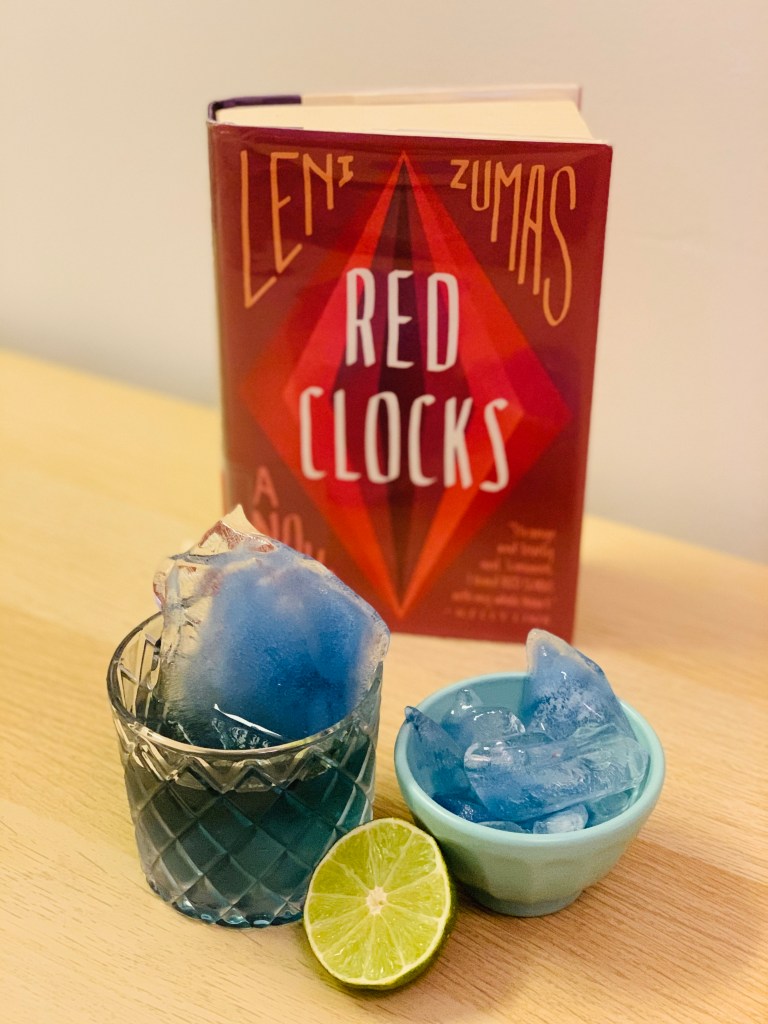
Aside from the dystopian premise, the most compelling parts of Red Clocks include glimpses into the life of the 19th century polar explorer, Eivør Mínervudottír, whose story is told in parallel with the other four female main characters. This drink emulates the glaciers and other ice formations that Eivør studied during her arctic expeditions, where she discovered characteristics of polar ice.


Eivør’s ice

Ingredients:
2 oz vodka
3 oz ginger beer
0.5 oz blue curaçao
0.5 oz lime juice
0.5 oz ginger-infused simple syrup*
flat chunks of colored ice**

  1. combine vodka, blue curaçao, lime juice, and syrup into a shaker, and shake with ice
  2. pour into a rocks glass, straining out the ice
  3. top the mix with ginger beer, and stir
  4. serve with 1-2 large chunks of the colored ice

Pro-tips:
*how to make ginger-infused syrup: Pour white granulated sugar and water into a pan (using a 2:1 sugar-to-water ratio) and heat the mixture on the stove until it starts to bubble. Once tiny bubbles start to appear, immediately take the boiling syrup off the stove and pour it into the into a glass jar with 1-2 tablespoons of grated ginger. Cover the jar with airtight lid until cool.

**how to make colored ice: Take sandwich-sized ziploc bags and fill them one-third of the way with filtered water. Add 1-2 tablespoons of butterfly pea flower tea or blue curaçao. Alternatively, you may use 5-8 drops of blue food coloring. Whatever you use for the blue coloring, make sure that the color is dispersed and dissolved in the water before you freeze them. Lay the ziploc bags flat in the freezer. Once frozen, strike the ice with a sturdy wooden spatula or rolling pin to break it up into chunks.


Another round, please! 🥂
You might also like:
Margaret Atwood’s The Handmaid’s Tale (1985)