📖How to Love a Jamaican: 🍸mermaid

📖: Alexia Arthurs’ How to Love a Jamaican (2018)
🍸: mermaid

Why this book?

June is Pride Month, so I will be highlighting works that feature Black LGBTQ+ stories for the rest of this month.

Alexia Arthurs’ How to Love a Jamaican is a brilliant collection of eleven short stories about Jamaicans and Jamaican Americans.

Through the lens of having lived in both Jamaica and America, Arthurs’ fiction explores the complications of the immigrant experience, belonging, identity, globalization, gender roles, and sexuality in both countries. Her stories portray how the choice to leave Jamaica for America not only has a profound effect on those who leave the island, but also on those who remain.

Female relationships (between college friends, grandmothers, mothers, and daughters) also serve as a central theme throughout the book. These relationships are portrayed in beautiful and nuanced ways, especially when Arthurs makes space for queer identities to take center stage in her stories. Some of my favorite stories in her collection are the ones that include queer perspectives, such as in “Island,” “We Eat Our Daughters,” and “Shirley from a Small Place.”


Why this drink?

Mermaids appear as a recurring symbol throughout the book. In an interview with The Paris Review, Arthurs notes that the mermaids in her stories “are an evolving metaphor,” as a reference to young female sexuality or transgressive sex. “But in a larger way,” she states, “I think of mermaids throughout the collection as challenging what people believe to be true about Jamaica. People tend to see Jamaica in such polarizing ways. Some think of Jamaica as being this paradise, and others think only of the high murder rates. I think of mermaids as being revelatory in this reckoning.”

The drink’s name and flavor profile also serve as a specific reference to one of the stories, “Mermaid River,” about a man and his childhood memories of his grandmother, who made and sold coconut drops by a river in their Jamaican hometown. For garnish, I added a couple of basil leaves to imitate mermaid emerging from the water.


mermaid

ingredients:
1.5 oz white rum
4 oz coconut cream (unsweetened)
2 tsp sugar (granulated white, cane, or coconut sugar – omit sugar if you are using sweetened coco cream)
1/3 tsp vanilla extract

for garnish:
whipped cream
caramelized ginger syrup*
2 basil leaves

  1. heat coconut cream, sugar, and vanilla extract in a sauce pan just until it begins to bubble
  2. remove the mixture from heat and let cool
  3. once cool, add rum to the mixture in a shaker and shake with ice
  4. serve in a chilled glass with ice. top the drink with whipped cream and a drizzle of caramelized syrup.

Pro-tips:
*how to make caramelized ginger syrup: Pour sugar and water into a pan (using a 2:1 sugar-to-water ratio), with a sprinkle of ground ginger, and heat the mixture on the stove until it starts to bubble. When the sugar begins to thicken into a caramel texture, immediately remove from stove and drizzle on the drink. I used brown sugar, but you can use granulated white sugar as well.

quarantine substitutes:
If you don’t have whipped cream, you can make whipped cream out of the coconut cream or coconut milk by whisking it in a mixing bowl with a pinch of (powdered) sugar, until it begins to fluff.
If you only have sweetened coconut cream, omit the sugar in this recipe.
If you only have coconut milk, you may use that instead of coconut cream.
Garnishes are just garnishes! So if you don’t have any herbs, omit the garnish!

This recipe was inspired by Shanna Schad’s Rum and Coconut Milk Cocktail.


Another round, please! 🥂

You might also like:
Roxane Gay’s Ayiti (2011)


Let’s discuss!

Finished the book? What did you think about it? Share your thoughts in the comments section below!

And check out these reviews and conversations with the author to learn more about the book, and the process behind the writing:

📖Sightseeing: 🍸priscilla’s gold

📖: Rattawut Lapcharoensap’s Sightseeing (2012)
🍸: priscilla’s gold

Why this book?

As part of Asian American Pacific Islander Heritage month, I wanted to read more works by underrepresented AAPI authors, particularly by writers of Southeast Asian heritage. So I asked a fellow Asian American friend – who’s a writer – for some recommendations, and Rattawut Lapcharoensap’s Sightseeing was one of them. Lapcharoensap’s book was published when he was 25 (talk about life goals)!

This collection of seven short stories is such a gem, with its vibrant observations of young people in Thailand, where Lapcharoensap spent his childhood. While straightforward and easy to read, it is full of feeling — wistfulness, regret, curiosity, and hope — from a perspective that is not often represented in mainstream publishing. It is the first work I’ve read from a Thai-American writer, and I would not have found this one on my own without my friend’s help — thank you, V!


Why this drink?

This drink was inspired by one of my favorite stories in the collection, “Priscilla the Cambodian,” which is about an unlikely friendship that forms between two local Thai boys and a girl who arrives in their town as a Cambodian refugee. One of the most memorable things about Priscilla is her gold-plated teeth, which represent one of the few valuable assets that her family was able to take with them after they fled from their home country. As a nod to Priscilla’s gold, I’m pairing a daiquiri-inspired cocktail made with the yellow juice of passion fruit, which is used in Thailand for refreshing drinks.


priscilla’s gold

ingredients:
2 oz gold rum
2 oz passion fruit juice
0.75 oz lime juice
0.5 oz ginger and lemongrass infused demerara syrup

for garnish:
lemon peel twist

  1. combine all ingredients in a shaker and shake with ice.
  2. serve in a chilled glass.
  3. garnish with a lemon twist.

This recipe was inspired by Difford’s Guide’s passion fruit daiquiri.

Pro-tips:
*how to make ginger and lemongrass infused demerara syrup: Pour demerara sugar and water into a pan (using a 1:1 sugar-to-water ratio) and heat the mixture on the stove until it starts to bubble. Once tiny bubbles start to appear, immediately take the boiling syrup off the stove and pour it into the into a glass jar with slices of fresh ginger and lemongrass. Cover the jar with airtight lid until cool.

*how to make a lemon twist garnish: Use a paring knife to peel off a strip of lemon rind. Remove most of the white pith from the zest to reduce the bitter taste. Trim the edges of your strip to make it look like a ribbon. I made my peel a little less than 1 inch wide. Twist into a spiral and add to your drink.

quarantine substitutes:
–I didn’t have any fresh passion fruit lying around, but I managed to find a carton of passion fruit juice at a local deli shop (who knew the convenience store around the corner would have more of a niche item selection than our local Whole Foods these days!). I’ve seen Ceres, Welch’s, and Goya passion fruit juice sold in some local grocery stores as well.
–Still can’t find any passion fruit juice around? Go ahead and make a plain ol’ daiquiri with lime, rum, and simple syrup. Or you can try swapping out the passion fruit juice for something more common like orange juice.
–No demerara sugar? Simply replace with regular white, granulated sugar.
–No fresh ginger? You can try using ground ginger instead.
–No lemongrass and no ginger? No problem! Just omit these ingredients and make a simple syrup.


Another round, please! 🥂

You might also like:
Lysley Tenorio’s Monstress (2012)

📖Monstress: 🍸squid mother

📖: Lysley Tenorio’s Monstress (2012)
🍸: squid mother

Why this book?

Monstress is Lysley Tenorio’s debut book, which includes a collection of eight short stories that follow Filipino characters in both the Philippines and California. All stories except for one, are told in the first person, welcoming us into the perspectives of diverse characters like an actress, faith healer, first-gen immigrants, and a young girl in a leper colony, among others. These stories are colorful vignettes of the dreams and aspirations of characters who all desire something beyond their current circumstances. In reading these stories, Tenorio’s tales leaves us with the questions like: What do we lose when we reach for something more? How do we change when we reach for these desires, and is getting what we want worth what we might lose?


Why this drink?

The drink’s name is a reference to the title story “Monstress,” about a Filipina actress who formerly starred as a squid monster in a horror film produced by her partner. Like “Monstress,” the other short stories in Tenorio’s book takes us between the Philippines and California, so this drink intends to do the same. I combined ingredients that are grown in the stories’ settings — coconuts (Philippines) and jalapeno peppers (California). To make this cocktail even more thematic, I carved a squid-shaped garnish out of a whole jalapeno pepper and submerged the tentacles in the cocktail for an extra spicy kick.

Also, Lysley Tenorio’s new book, The Son of Good Fortune, is coming out this July, and I can’t wait to read it! So if you liked his short stories, there’s more to come, YAY!


squid mother

ingredients:
2 oz white rum
4 oz Goya coconut water
1 oz jalapeno infused simple syrup
0.5 oz lime juice

for garnish:
jalapeno pepper

  1. Combine all ingredients in a shaker and shake with ice.
  2. Serve in a chilled glass with ice.
  3. Garnish with a whole jalapeno pepper, carved into the shape of a squid. If you prefer to not have a “squid” in your drink you can simply add slices of jalepeno pepper instead.

This recipe was inspired by Liquor.com’s caribeno.

Pro-tips:
*how to make jalapeno infused simple syrup: Pour sugar and water into a pan (using a 1:1 sugar-to-water ratio) and heat the mixture on the stove until it starts to bubble. Once tiny bubbles start to appear, immediately take the boiling syrup off the stove and pour it into the into a glass jar with slices of jalapeno pepper. Cover the jar with airtight lid until cool.


Another round, please! 🥂

You might also like:
Rattawut Lapcharoensap’s Sightseeing (2004)

📖The Best We Could Do: 🍸rewind, reverse

📖: Thi Bui’s The Best We Could Do (2017)
🍸: rewind, reverse

Why this book?

Thi Bui’s graphic memoir opens with her giving birth to her first child. As she copes with becoming a new parent, she tries to understand the choices her parents made during and after the Vietnam War. Through her parents’ stories and experiences, she seeks to understand what kind of inheritance she can leave behind for her son. As she unravels her family’s story, she learns how memory, trauma and the refugee reflex are inheritances that are passed down through generations.


Why this drink?

Thi Bui’s graphic memoir resonates with me because my family’s memories of the Vietnam War are part of my inheritance growing up as a first-gen immigrant. Aside from memories, one of the things my grandma passed down to me is an acquired taste for sour, salt, and spice. This drink is a riff on the classic Paloma, but also inspired by the grapefruit wedges that my grandma likes to eat with salt and red Thai chili peppers. This grapefruit drink was also chosen because of the pink and red hues that permeate the pages of this beautifully illustrated graphic memoir.


rewind, reverse

ingredients:
2 oz tequila
4 oz freshly squeezed grapefruit juice
0.75 oz lime juice
0.5 tsp maraschino liqueur 
1-2 drops saline solution*
1-2 oz grapefruit seltzer (alcoholic or non-alcoholic)
2 slices thai chili peppers

for garnish:
2 slices of thai chili peppers, sea salt flakes, lime wheel, grapefruit wheel

  1. rim a chilled glass with salt
  2. muddle the chili peppers
  3. combine all ingredients (except for the seltzer) & shake with ice
  4. pour into glass with ice & top off with seltzer
  5. garnish peppers, lime and grapefruit wheels

Pro-tips:
*To make saline solution, dissolve 1 part salt in 4 parts water.

Quarantine substitutions:
Omit the maraschino liqueur if you don’t have any.
Ground cayenne pepper can be subbed in for the Thai chili peppers.
For the rim, sub the sea salt flakes with regular salt.


Another round, please! 🥂

You might also like:
Kao Kalia Yang’s The Latehomecomer: A Hmong Family Memoir (2008)

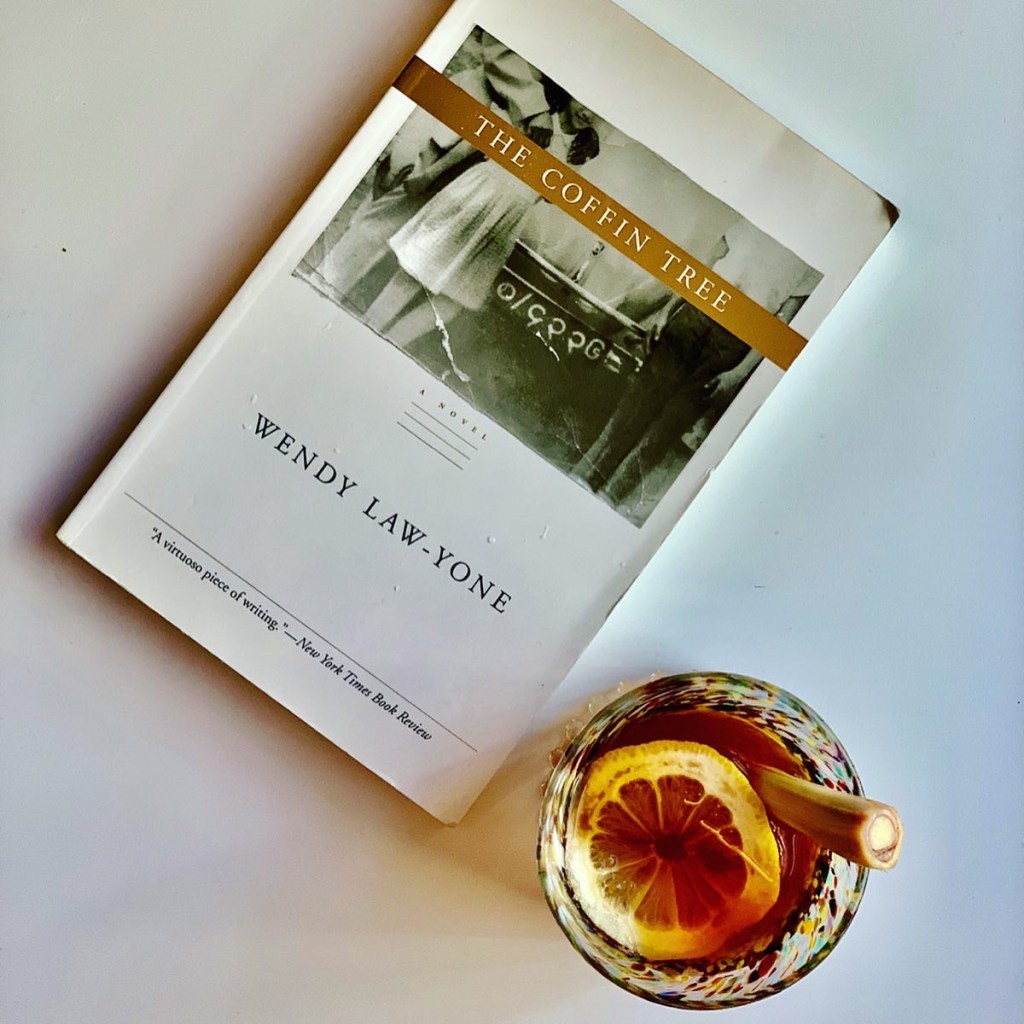
📖The Coffin Tree: 🍸living things

📖: Wendy Law-Yone’s The Coffin Tree (1983)
🍸: living things

Why this book?

The Coffin Tree is Wendy Law-Yone’s first book and novel. The daughter of a well-known publisher, editor and politician in Burma, Law-Yone left her home as a stateless person and resettled in the U.S. in the early 1970’s. Her background and experience as a refugee influence her work, particularly in The Coffin Tree, which is about a young woman and her half-brother who escape Burma after a political coup. After arriving in America, they are deeply affected by the trauma of resettling in a nation that is unkind and indifferent to migrants like them. The novel follows the psychological unraveling and recovery of the protagonist, for whom memory serves as both a source of trauma and healing. This book is a key work in the Asian American canon that explores mental illness through the experience of assimilation.


Why this drink?

The first line in Wendy Law-Yone’s novel is: “Living things prefer to go on living” — opening up a story about Burmese refugees, mental illness, trauma, and resettlement.

In Burma, toddy is a spirit made from the fermented sap of palm trees, called toddies. Since I can’t get my hands on real toddy, I created a hot toddy as a nod to the author’s Burmese American background. To include some kind of tree sap in this cocktail, I used maple syrup infused with lemongrass and ginger. Both whiskey and rum are popular spirits in Burma, so try this out using either spirit and let me know which you like best!


living things

ingredients:
1.5 oz whiskey (or try a black spiced rum instead!)
2-2.5 oz English breakfast tea 
0.5 tbsp lemon juice 
2-3 tsp maple syrup infused with ginger and lemongrass, to taste

for garnish:
thin slivers of fresh ginger, lemon wheel, & lemongrass stick 

  1. steep English breakfast tea in 2-2.5 oz of hot water
  2. combine all ingredients in a mixing glass and stir well until the maple syrup fully dissolves
  3. serve in a heat-proof glass or mug
  4. garnish with fresh ginger, lemon wheel, and lemongrass

Pro-tips:
*To make the ginger and lemongrass infused maple syrup, heat your favorite maple syrup in a pan over low heat until the syrup becomes liquid. Pour the liquid over freshly grated ginger and sliced lemongrass in a jar and tightly seal it until cool. Strain out the ginger and lemongrass after the syrup cools.

Quarantine substitutions:
No English breakfast tea? Any black tea will do! Or experiment with another tea of your choice.

No fresh ginger or lemongrass? Use powdered ginger instead, and you can omit the lemongrass.

If you do not have maple syrup, make a demerara simple syrup by boiling a 2:1 ratio of sugar to water in a pan, just until bubbles appear. While still boiling hot, pour the syrup over the ginger and lemongrass in a jar and tightly seal it until cool. Strain out the ginger and lemongrass after the syrup cools.


Another round, please! 🥂

You might also like:
Viet Thanh Nguyen’s The Refugees (2006)

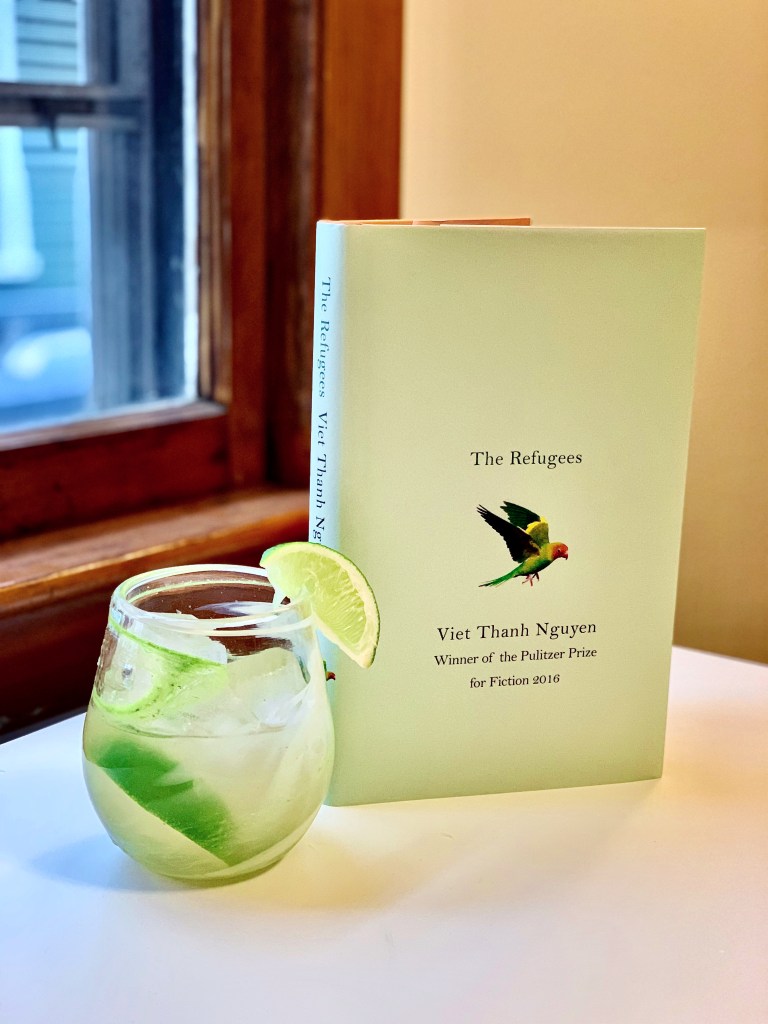
📖The Refugees: 🍸at home

📖: Viet Thanh Nguyen’s The Refugees (2006)
🍸: at home

Why this book?

The Refugees is Viet Thanh Nguyen’s first collection of eight short stories about people who have left Vietnam after the fall of Saigon. Today, April 30th, is the 45th anniversary of the fall of Saigon, which spurred a mass exodus of South Vietnamese people, many of whom relocated in the US.

Based on Nguyen’s academic research and cultural critique, he presents the idea that war never dies because its memory continues to live on through its survivors, who then pass it down to their descendants.

For this reason, Nguyen’s fiction broaden the definition of what it means to be a refugee. Refugees are not just the individuals who fled from their home countries. Anyone whose life is still haunted by the memory and trauma of war and displacement is a refugee — even if they are generations away from the original emigres.

This is a provocative reframing of what it means to be a refugee, and an evocative reminder that more empathy and compassion are needed now — especially when the rhetoric of our leaders are rooted in xenophobia and closed border policies. The Refugees is a deeply human book, that give us a snapshot into the lives and memories of Vietnamese refugees, and how they continue to grapple with issues of identity, belonging, family, and loss in a new place that they need to now call home.


Why this drink?

This drink was inspired by chanh muối, an intensely salty, carbonated Vietnamese limeade made with preserved, salted limes and soda water (the crisp carbonation amps up the piquant flavors of salt, sugar, and fermented zest). Because it takes two months to fully pickle the salted limes, I developed this easy-to-make bubbly, salty, lime margarita to evoke the essence of a traditional chanh muối.

I am pairing this chanh muối inspired cocktail with The Refugees because this is a book about memory and displacement, and I associate the limeade with nostalgia and remembrance of a home that’s long gone. My mom grew up in Vietnam during the war, and when I shared my first chanh muối with her, she told me that it reminded her of her childhood in Saigon.


at home

ingredients:
1.5 oz gold tequila 
0.5 oz hot water at 160F 
0.5 triple sec
0.5 oz lemongrass ginger demerara syrup*
half a lime, cut into wedges
1-2 small pinches of smoked sea salt flakes, to taste
1-2 oz club soda, as desired

for garnish:
lime wedge, mint, & smoked sea salt flakes

  1. muddle 4 wedges of lime (~half of a lime)
  2. combine all ingredients (except for club soda) & shake with ice
  3. pour over ice, top off with club soda, add a few flakes of sea salt, to taste
  4. garnish with lime wedge and mint

Pro-Tips:
*Pour demerara sugar and water into a pan (using a 2:1 sugar-to-water ratio) and heat the mixture on the stove until it starts to bubble. Once tiny bubbles start to appear, immediately take the boiling syrup off the stove and pour it into the into a glass jar with thinly sliced pieces of lemongrass and freshly grated ginger. Cover the jar with airtight lid until cool.

quarantine substitutions:
No lemongrass? No problem – just omit it. No fresh ginger? Use ground ginger as a substitute. If you don’t have any kind of ginger, add a bit of ground black pepper to your simple syrup to give it a subtle kick – don’t go overboard as you don’t want the drink to taste too peppery.

No smoked sea salt? Regular salt will do!


Another round, please! 🥂

You might also like:
Aimee Phan’s We Should Never Meet (2004)

📖Half of a Yellow Sun: 🍸olanna

📖: Chimamanda Ngozi Adichie’s Half of a Yellow Sun (2006)
🍸: olanna

Why this book?

Half of a Yellow Sun is an epic story of two twin sisters, their partners, and a house servant in Nigeria. The book spans a decade — from Nigeria’s independence in 1960 to the Nigerian-Biafra War of 1967-1970 — and follows the lives of these five individuals as they experience times of peace, prosperity, hope, revolution, devastation, and displacement. The book gives sharp insight and nuanced perspectives of a civil conflict that the rest of the world has viewed as a war of starvation.

Adichie puts great effort into exploring the impact of violence and revolution on civilian lives, rather than focusing on just the fighting. Because the conflict so significantly impacted civilians, the story of the war cannot be fully told without recognizing the story of the people who lived through it. While the book primarily highlights five main characters, the scope of the novel remains broad, due to Adichie’s details and discussions around Nigerian history, politics, class, and colonialism.


Why this drink?

Yellow appears as a significant color: one of the protagonists’ names, Olanna, means ‘father’s gold’ in Igbo, and the title of the novel references the emblem of a yellow rising sun on the Biafran flag. With that in mind, I decided to make a spin-off of a Nigerian Chapman with freshly squeezed orange juice and yellow-colored spirits to give this drink its gold color (instead of the traditional red color). 


olanna

ingredients:
2 oz spiced gold rum
0.5 oz elderflower liqueur 
1 tsp Suze 
3 oz orange juice
0.5 oz lemon juice 
juice of 1 lime wedge
2 oz seltzer water 

for garnish:
orange wheels, sliced in half

  1. combine all ingredients (except for seltzer water) and shake with ice
  2. pour into a chilled glass with halved orange wheels
  3. top off with seltzer water
  4. serve with ice (optional)

quarantine substitutions:
Suze is not always available at local liquor stores. Omit this ingredient – if you want to replace it, you can use any other gentian-based bitter liqueur, or simply add some bitters to the drink. (Chapmans traditionally call for bitters anyway).

If you do not have elderflower liqueur, replace it with a simple syrup (boil a 1 part sugar 1 part water mixture on the stove just until bubbles appear, and let cool). You may also use the syrup from canned lychees. Or use ripe freshly squeezed oranges that are already naturally sweet, so no need for an extra sweetener.


Another round, please! 🥂

You might also like:
Jhumpa Lahiri’s The Lowland (2013)

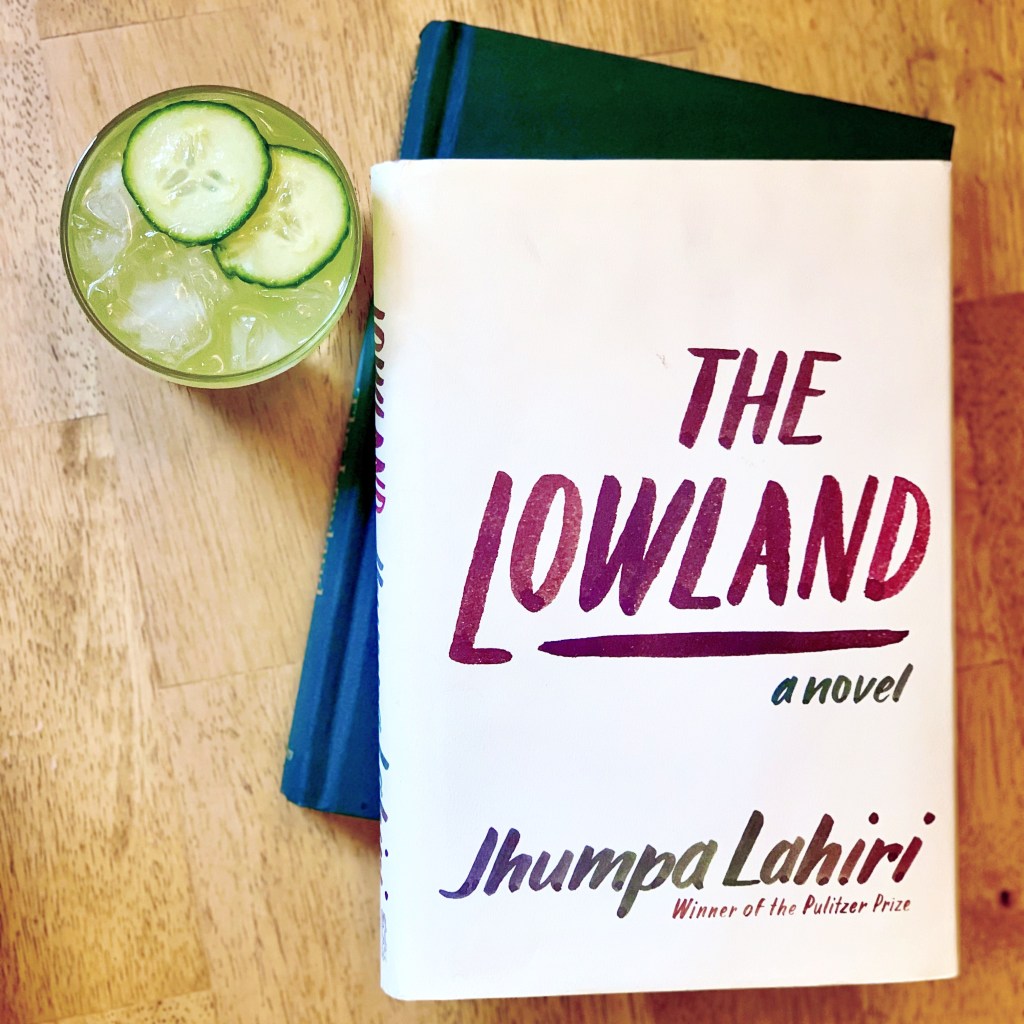
📖The Lowland:🍸after the rain

📖: Jhumpa Lahiri’s The Lowland (2013)
🍸: after the rain

Why this book?

This is Jhumpa Lahiri’s second novel and fourth book. Like her previous works, this story focuses on the experience of Indian immigrants in America. At the same time, the novel is also about the idealism of youth, rebellion, trauma, and loss. I especially appreciated how The Lowland, unlike Lahiri’s other works, places the protagonists’ story within a broader context of geopolitics, inequality, and revolution, showing how these individuals’ experiences of migration and displacement are inextricably tied to global forces.

The Lowland is a story of two brothers who grow up near a marsh in a small Calcutta neighborhood. Subhash dreams of going to America to study to become a scientist, while Udayan, the more rash and rebellious brother, joins the Naxalite movement, which was known for its radical Maoist politics, violence against authorities, and popularity among college campuses during the 1960s. Then one day in the marshy lowland, the two brothers’ fates diverge.

I love reading Lahiri’s writing because of its deceptive simplicity. Her prose says so much in spite of its restraint and lack of embellishment. Many of the details in her story are just small, intimate, or mundane observations of daily life, like eating cream cheese in a parking lot, finding your wife’s birth control pills, or witnessing fall foliage for the first time in New England. Though seemingly neutral on the surface, these observations are propelled by an undertow of longing, regret, and grief. They accumulate over the course of her storytelling, and before you fully realize the change in tide, you’re washed over by a wave of emotion that has been gaining momentum the whole time.


Why this drink?

The marshy lowland situated between two ponds is both setting and symbol within the novel. The lowland floods in rainy season and then dries up during the hot months, making the two ponds “at times separate; at other times inseparable,” just like the two brothers who are often mistaken for twins. This drink was chosen for its vegetal taste, like grass and leaves becoming lush after the rain.

Note: This recipe has been adapted from The Up & Up‘s “Bring June Flowers.” Due to availability of ingredients during quarantine, I used green tea instead of jasmine tea leaves that the Bring June Flowers recipe calls for.


after the rain

Ingredients:
1.5 oz vodka
0.5 oz Suze
0.75 oz green tea simple syrup*
0.75 oz lemon juice
3 muddled cucumber slices

for garnish:
cucumber ruffle or slices

  1. muddle cucumber in a shaker
  2. pour all remaining ingredients into shaker, and shake with ice
  3. pour into glass, straining out the muddled cucumber and ice
  4. serve with ice and cucumber garnish

Pro-tips:
*how to make green tea infused simple syrup: Steep green tea in hot water, boiled to a temperature of 180F degrees. Pour white granulated sugar and green tea into a pan (using a 1:1 sugar-to-tea ratio) and heat the mixture on the stove until it starts to bubble. Once tiny bubbles start to appear, immediately take the boiling syrup off the stove and pour it into the into a glass jar. Cover the jar with airtight lid until cool.


Another round, please! 🥂

You might also like:
Khalend Hosseini’s The Kite Runner (2003)

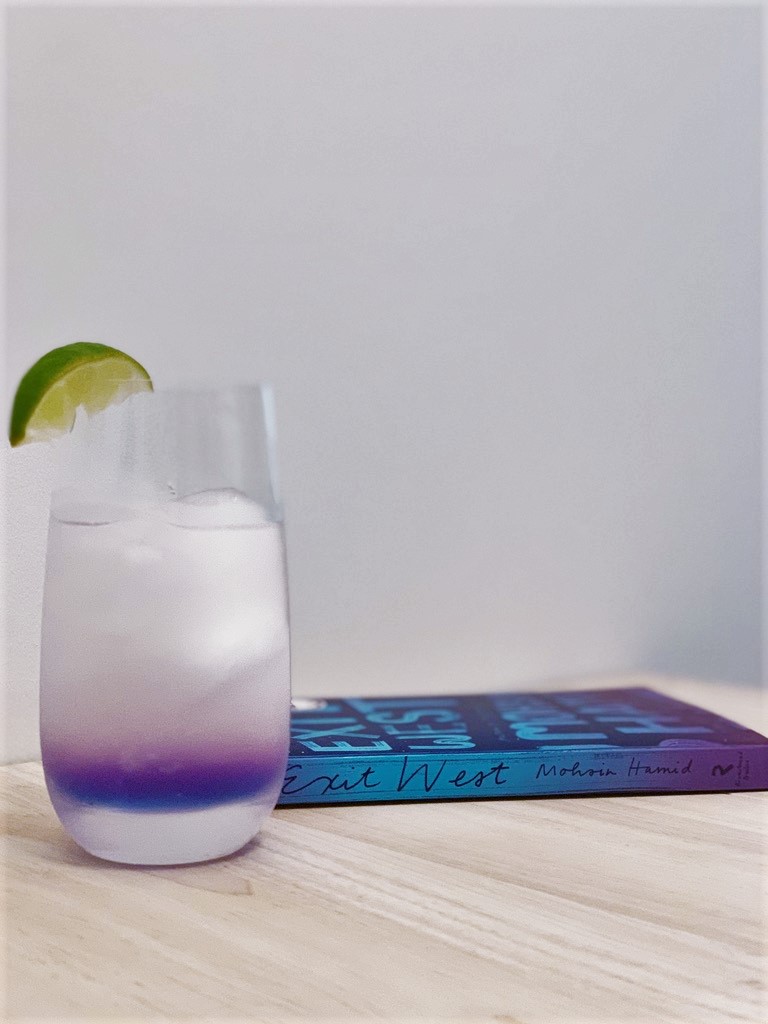
📖Exit West:🍸open door

📖: Mohsin Hamid’s Exit West (2017)
🍸: open door

Why this book?

To cross boundaries in the world of Mohsin Hamid’s Exit West, you need to first find an open door. This is no easy task: while many portals exist, it is uncertain which will actually transport you to a different place. Once you find one, you simply step through the threshold. You might end up in a woman’s bedroom closet in Australia, an abandoned mansion in England, or at a refugee camp in Greece. It doesn’t matter because what’s on the other side appears to be better than what you are leaving behind.

The novel’s main characters, Nadia and Saeed, harbor this hope as they hastily leave their war-torn country through a magic portal. During their journey of exile, they find that (not unsurprisingly) the “doors out, which is to say the doors to richer destinations, were heavily guarded, but the doors in, the doors from poorer places, were mostly left unsecured.”

To illustrate this, Hamid intersperses the couple’s story with vignettes of other individuals who move through “doors out” and “doors in.” In doing so, the author expands the novel beyond a story that is just about refugees to one that is also about the implications of global mass migration. It makes a statement about how “migrants” and “natives” see and treat each other upon arrival, once boundaries have been crossed and blurred.

What I love so much about this book is how marvelous, yet understated the magical realism is, because the book is not so much about the fantastic doors, how they work, or how it feels to move through that mode of transport. It is more about what happens before and after the threshold has been crossed. It is about how the choice to grant or deny entry to migrants says a lot more about the gatekeepers than about those who seek to step through.


Why this drink?

Like the open portals in the novel, this drink is magical! The secret is the butterfly pea flower infused syrup, which changes from blue to purple once we layer on the spirits and lime juice. Also, the book cover is eye-catching — so the drink should be, too.


open door

Ingredients:
1.5 oz mezcal 
0.5 oz Italicus 
0.75 oz fresh lime juice 
2.5 oz still or sparkling water
1 oz butterfly pea flower infused simple syrup*

for garnish:
lime wedge

  1. combine and stir spirits in a mixing glass
  2. combine and stir lime juice and water in a separate glass
  3. pour butterfly pea flower syrup into a highball glass, and add ice
  4. add the alcohol mixture over the syrup and ice, then top with limeade
  5. garnish with lime wedge

Pro-tips:
**how to make butterfly pea flower infused simple syrup: Steep butterfly pea flowers in boiling water and wait until cool. Pour white granulated sugar and butterfly pea flower infused water into a pan (using a 2:1 sugar-to-water ratio) and heat the mixture on the stove until it starts to bubble. Once tiny bubbles start to appear, immediately take the boiling syrup off the stove and pour it into the into a glass jar. Cover the jar with airtight lid until cool.


Another round, please! 🥂

You might also like:
Junot Díaz’s The Brief Wondrous Life of Oscar Wao (2007)

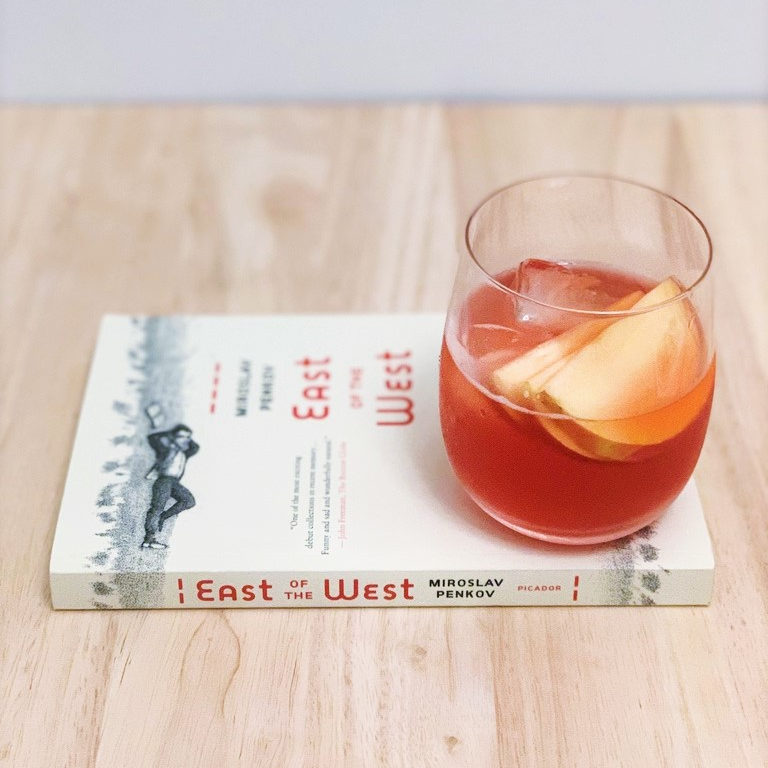
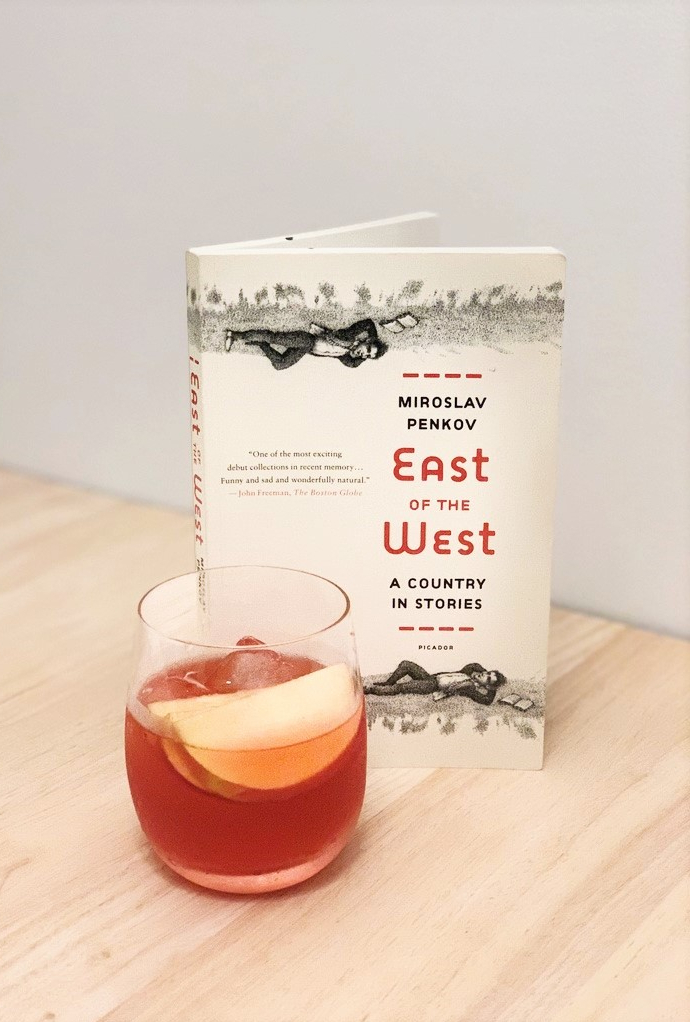
📖East of the West:🍸crabapple mash

📖: Miroslav Penkov’s East of the West (2011)
🍸: crabapple mash

Why this book?

This month, we will be reading books about crossing boundaries. We will explore stories about individuals who leave their homes — to flee from the political instability and/or to seek more opportunities abroad.

Our first pick for April is Miroslav Penkov’s East of the West, a collection of short stories steeped in the Bulgarian writer’s longing for and memory of home. Each story is a refreshing (and often quirky) surprise, giving the reader a glimpse into the lives of individuals throughout the country’s history of political upheavals — from the era of Ottoman rule, the Balkan Wars, the rise and fall of communism, to the present day, when many young people (like Penkov) leave home for a better life abroad.

Penkov’s tales can be eccentric, funny, absurd, and dark all at the same time. For example, one of the stories is about a grandson in America who tries to order Lenin’s corpse from eBay for his communist grandfather in Bulgaria. After seeing that, how could I not pick up the book?


Why this drink?

This drink is inspired by that story I mentioned above, called “Buying Lenin.” In this tale, a Communist grandfather warns his grandson that reading too many books in English will turn his brains into “crabapple mash.” He tells his grandson to consume communist literature instead, lest he turn into a “rotten, capitalist pig.”

The drink’s apple-infused ingredients is a nod to this nugget of grandfatherly wisdom, and its red color is a reference to the grandfather’s political leaning. The cocktail is also a mashup of an Old Fashioned and Negroni — just like how Penkov’s short story collection is an unexpected mix of folklore, history, and intergenerational narratives.


crabapple mash

Ingredients:
1.5 oz mulled bourbon with apple, cinnamon, nutmeg, & black peppercorn*
1.5 oz Campari
0.5 oz dry vermouth 
0.5 oz mashed apple simple syrup**
1-2 dashes orange bitters 

for garnish:
apple slices 

  1. combine all ingredients in a mixing glass with ice, and stir
  2. pour into a bourbon glass, straining out the ice
  3. add ice
  4. garnish with apple slices

Pro-tips:
*how to make mulled bourbon: Combine apple peels and chunks in a pot with bourbon. Add ground cinnamon, nutmeg, and black peppercorn, to taste. Simmer the mixture until almost boiling. Strain out the apple bits.

**how to make mashed apple simple syrup: Take the apple bits that were used to mull the bourbon. Muddle them until they turn into a pulpy mash. Pour white granulated sugar and water into a pan (using a 1:1 sugar-to-water ratio), add the apple mash, and heat the mixture on the stove until it starts to bubble. Once tiny bubbles start to appear, immediately take the boiling syrup off the stove and pour it into the into a glass jar, straining out the apple mash. Cover the jar with airtight lid until cool.


Another round, please! 🥂
You might also like:
Chimamanda Ngozi Adichie’s The Thing Around Your Neck (2009)