📖The House on Mango Street: 🍸home in the heart

📖: Sandra Cisneros’s The House on Mango Street (1983)
🍸: home in the heart

Why this book?

Cisnero’s novel is about a young girl named Esperanza, who longs for a house of her own, far away from her family’s house on Mango Street in Chicago. She dreams of going somewhere else where she’s free to be herself, to be an artist, to be unmoored from the expectations of what it means to be a girl in her Latinx neighborhood.

But no matter how far Esperanza will eventually go, the house on Mango Street will always be a part of her. “One day I’ll own my own house,” she muses, “but I won’t forget who I am or where I came from…because I know how it is to be without a house…I have gone away to come back. For the ones I left behind. For the ones who cannot out.”

I was really swept up in Cisnero’s evocative portrayal of the aspirations, observations, and concerns of a girl in the process of discovering who she wants to become. I enjoyed that the novel was written in an unusual way (through a series of vignettes), and Cisneros has such a beautiful way of painting a scene with brevity and simplicity.

Through Esperanza’s reflections on the purpose and direction of her life, Cisneros poses the question of whether the work that we do (and the art that we create) should be done in the service of others. If yes, then what would this look like?

I was just finishing this book when I heard of Ruth Bader Ginsburg’s passing, which made these questions even more timely and relevant. When asked by the Stanford Daily in 2017 what advice she has for young people, she said, “Whatever paid work you pursue, do something outside of yourself that you really care about, that you are passionate about. Whether it’s the environment [or] discrimination. Do something that will make life a little better for people less fortunate than you.” ❤️️ RIP, RBG


Why this drink?

For this pairing, I made a mango-based drink 🥭 with Campari as a nod to Esperanza’s red house on Mango Street. 🏠


home in the heart

ingredients:
1.25 oz bourbon
0.25 oz Campari
2 oz mango juice
0.25 oz fresh lime juice
pinch of cayenne pepper

for garnish:
Tajin seasoning, or a mix of cayenne pepper, black pepper, and salt

  1. combine all ingredients in a shaker and shake with ice
  2. use a wedge of lime to wet the rim of the glass, then dip your rim into the Tajin seasoning
  3. pour mixture into the glass, and serve with ice

Another round, please! 🥂

You might also like:
Maxine Hong Kingston’s The Woman Warrior (1976)

Let’s discuss!

Finished the book? What did you think about it? Share your thoughts in the comments section below!
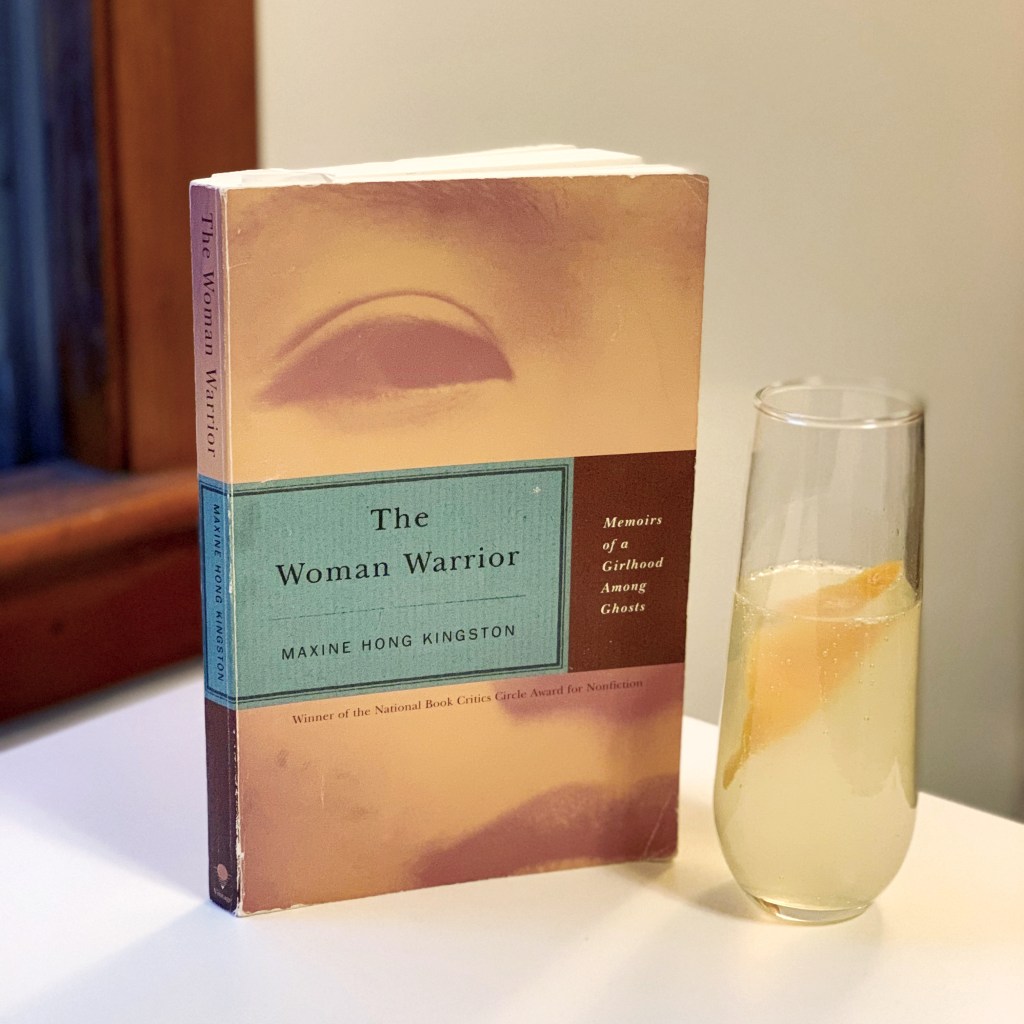
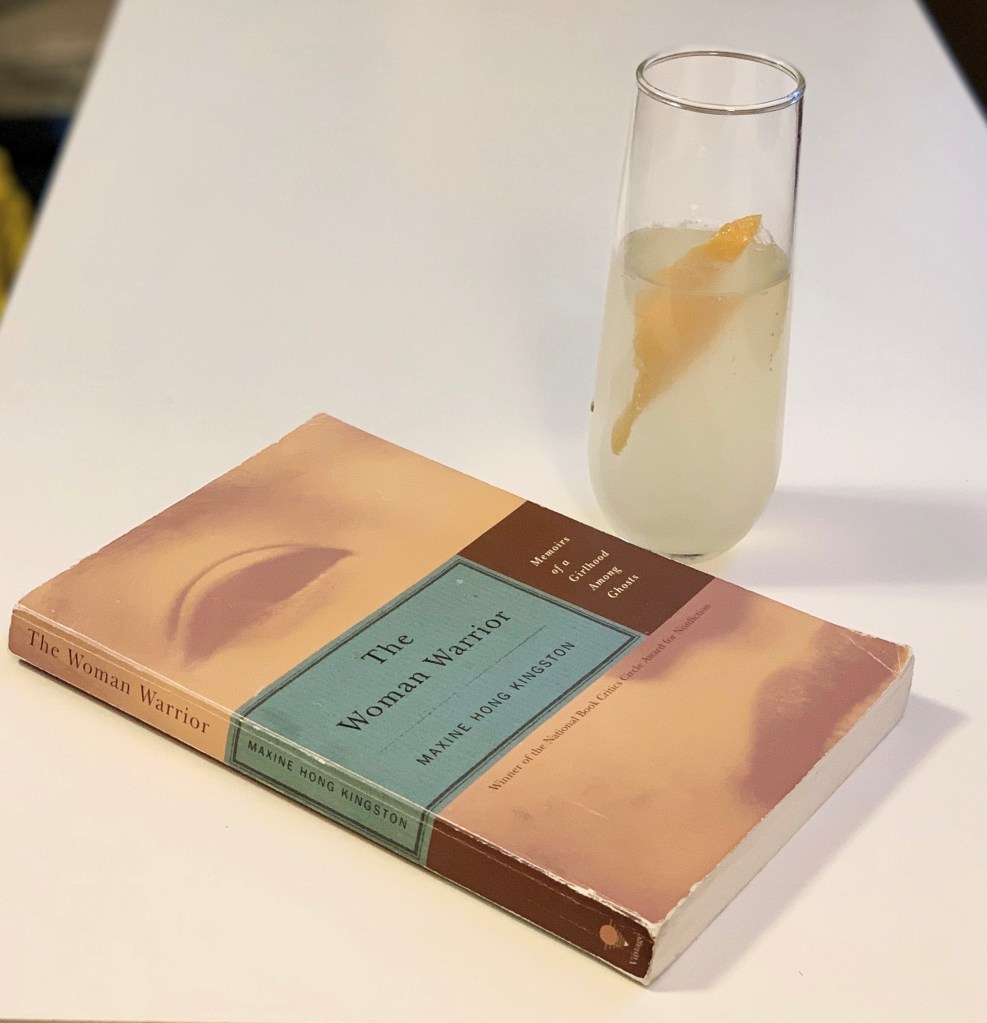
📖The Woman Warrior: 🍸silver bolt

📖: Maxine Hong Kingston’s The Woman Warrior (1976)
🍸: silver bolt

Why this book?

The Woman Warrior holds a special place in my reading life. I first read it in college for an Asian American literature class, which introduced me to a world of #ownvoices stories that helped me feel seen for the first time.

In her book, Kingston recounts her upbringing as a Chinese American girl in California. Rereading it gave me a newfound appreciation for Kingston’s craft. Defying the bounds of memoir-writing, Kingston seamlessly blends fact and fiction – incorporating myths and fantastical images – to the point where I wasn’t sure how much of her stories were grounded in memory or pure imagination. I love that the book challenges me to consider whether there’s really a difference between what we remember and what we imagine.


Why this drink?

In the chapter “White Tigers,” Kingston as a young girl imagines herself becoming the great swordswoman, Hua Mulan, as a way to process her experiences growing up female and Chinese in the context of her family and community. In her/Mulan’s warrior training, she describes her ability to make a sword appear out of the sky, like a “silver bolt in the sunlight,” signaling her coming of age as a warrior woman.

So for this pairing, I made a silvery-gold drink in a stemless flute to emulate the shape of a sword. I also incorporated grapefruit and lychee flavors because these fruits make an appearance in Kingston’s book.


And speaking of Mulan 🧐 I want to learn more about other adaptations of her story and understand how it has evolved over time, so I’m planning to check out Lan Dong’s book Mulan’s Legend and Legacy in China and the United States.

For a quick reference to other versions of Mulan besides the new Disney film, check out this NYT article: “Mulan, a Most Adaptable Heroine: There’s a Version for Every Era.”


silver bolt

ingredients:
1 oz vodka
0.5 oz lychee liqueur
0.5 oz fresh grapefruit juice
1 tsp simple syrup
4 oz champagne

for garnish:
grapefruit twist

  1. combine all ingredients, except for the champagne, in a shaker and shake with ice
  2. strain into a stemless flute glass
  3. top off with chilled champagne
  4. garnish with a grapefruit twist

Another round, please! 🥂

You might also like:
Amy Tan’s The Opposite of Fate: Memories of a Writing Life (2004)

Let’s discuss!

Finished the book? What did you think about it? Share your thoughts in the comments section below!
And check out these articles to learn more about the book and the writer:

📖Severance: 🍸the city

📖: Ling Ma’s Severance (2018)
🍸: the city

Why this book?

Published in 2018, Severance is a novel about NYC resident Candance Chen who becomes one of the few survivors of the Shen Fever pandemic, caused by a flu-like virus initially detected in China.

Like Candace, I was living in NYC when COVID19 began to appear, so reading the novel’s portrayal of Shen Fever’s spread felt eerily prescient – from its descriptions of the public’s skepticism and confusion; to the shutdown of businesses; to the residents’ flight out of the city.

But what felt most unsettling about the book was its exploration of late-stage capitalism and its absurdities. In the novel, the virus turns people into zombies who perform repetitive, mind-numbing actions until they waste away. Is this a metaphor for what capitalism does to us – trapping us in an endless loop of work, production, consumption, and desire for more than what we already have?

One of the story’s details that stuck with me the most was Candace’s decision to outsource a manufacturing job to a Chinese factory, even though she knew that the job would cause real harm to the workers’ health. This made me reflect on how capitalism works like a trick mirror: by exploiting others in the global market, we think we gain an economic advantage. But participating in this capitalist exploitation also re-creates inequalities at home, widening a wealth gap that underpins a system of racial disparities. With Labor Day approaching, I’m thinking about my role in the global economy: what effect does my work have on others and how do I spend my money? Can it be possible for anyone to truly live outside of capitalism?  


Why this drink?

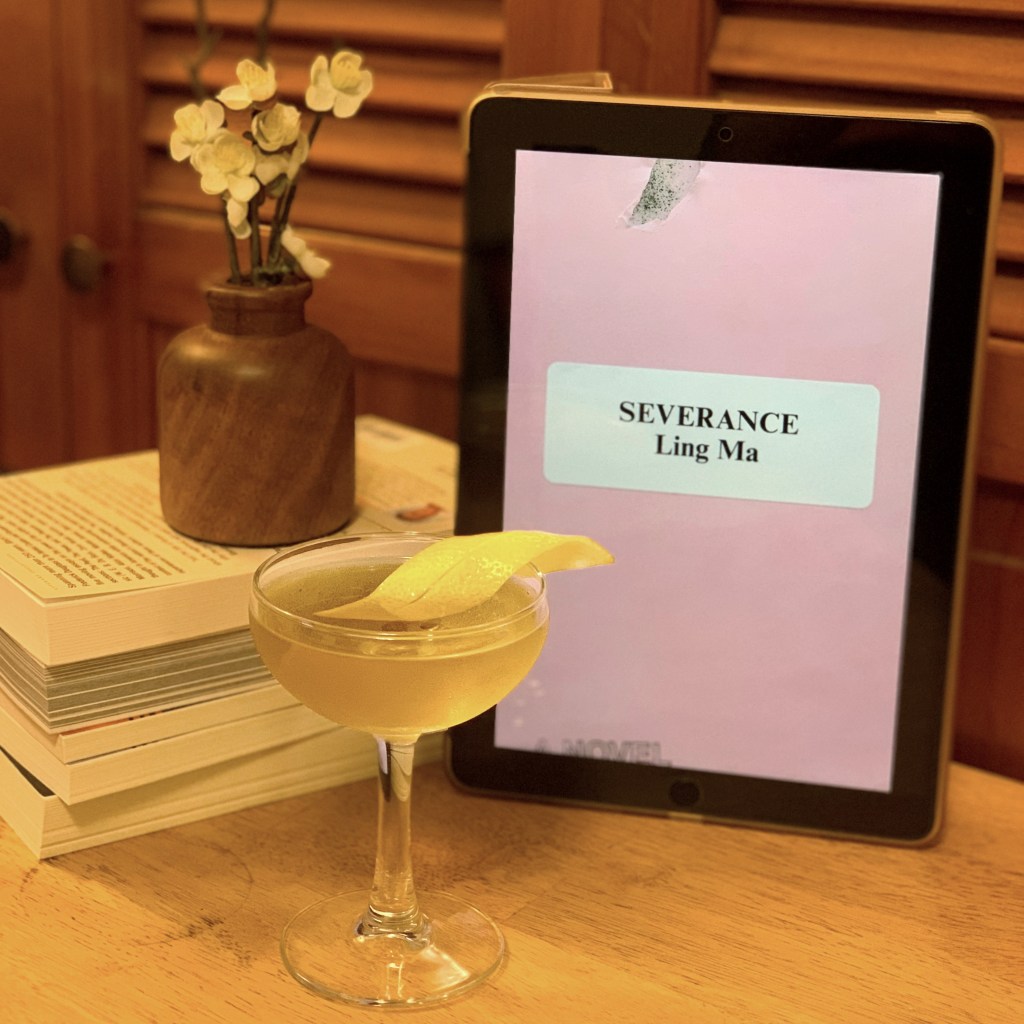
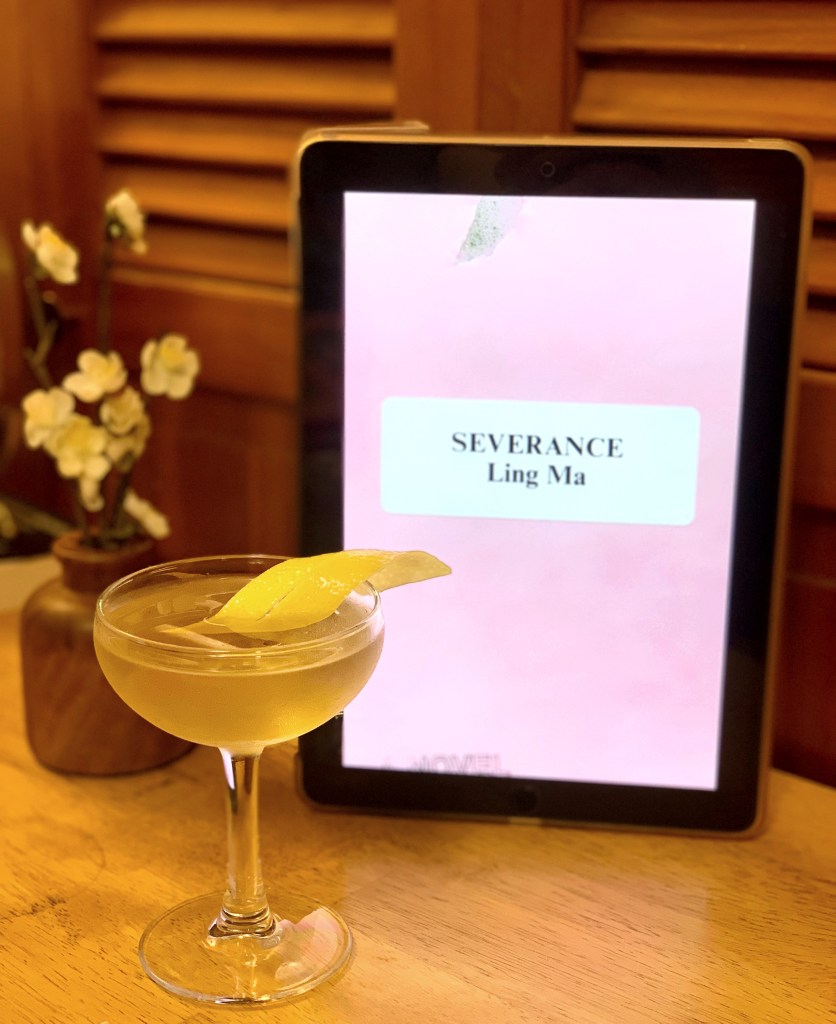
As a toast to the novel’s setting in NYC, I am pairing Severance with a dry version of the Manhattan cocktail. I used bourbon instead of rye, and because white vs. red vermouth was used, I garnished with a lemon peel instead of a cherry. The 2:1 ratio of whiskey to vermouth that I used aligns with the classic sweet Manhattan made with red vermouth.


the city

ingredients:
2 oz bourbon
1 oz dry vermouth
2 dashes orange bitters

*for garnish: lemon peel

  1. combine the all ingredients in a mixing glass, and stir well with ice
  2. serve in a chilled glass, straining out the ice
  3. garnish with a lemon peel

Pro-Tips:
*whiskey alternative: you may use a rye whiskey instead of bourbon for a drier, spicier taste.
*vermouth alternative: you may use red (sweet) vermouth to make a sweet version of this Manhattan cocktail. Or you may use a 50/50 blend of red and white vermouth to make a “Perfect” Manhattan.
*bitters alternative: you may use Angostura bitters instead of orange bitters. I chose orange bitters for a brighter, citrus-y taste.
*garnish alternative: if you are using sweet vermouth instead of dry vermouth, garnish with a maraschino cherry vs. lemon peel.


Another round, please! 🥂

You might also like:
Charles Yu’s How to Live Safely in a Science Fictional Universe (2010)


Let’s discuss!

Finished the book? What did you think about it? Share your thoughts in the comments section below!
And check out these reviews to learn more about the book:

📖The Sympathizer: 🍸man of two minds

📖: Viet Thanh Nguyen’s The Sympathizer (2015)
🍸: man of two minds

Why this book?

I picked up The Sympathizer because I was so thrilled to see a Vietnam War novel by a Vietnamese-American writer. This is one of my FAVORITE books — I still cannot stop thinking about the questions it raises, like: What do you do when you realize your complicity in destructive systems of power? What is the cost of loyalty when you subscribe to any political ideology?

This novel is narrated by a nameless half-Vietnamese, half-French Communist double agent, known as the Captain, who is sent to spy on Vietnamese refugees in California after the Fall of Saigon. In telling his story, the Captain rejects the prevalence of US-centric and imperialistic interpretations of the war, while criticizing both US and Vietnamese forces for their roles in the conflict, sparing no side from guilt. In doing so, the book challenged me to question my assumptions about all the players in this war. And on a more personal level, Viet Thanh Nguyen’s brilliant writing made me think more critically about my relationship to the US as a member of the Vietnamese diaspora.


Why this drink?

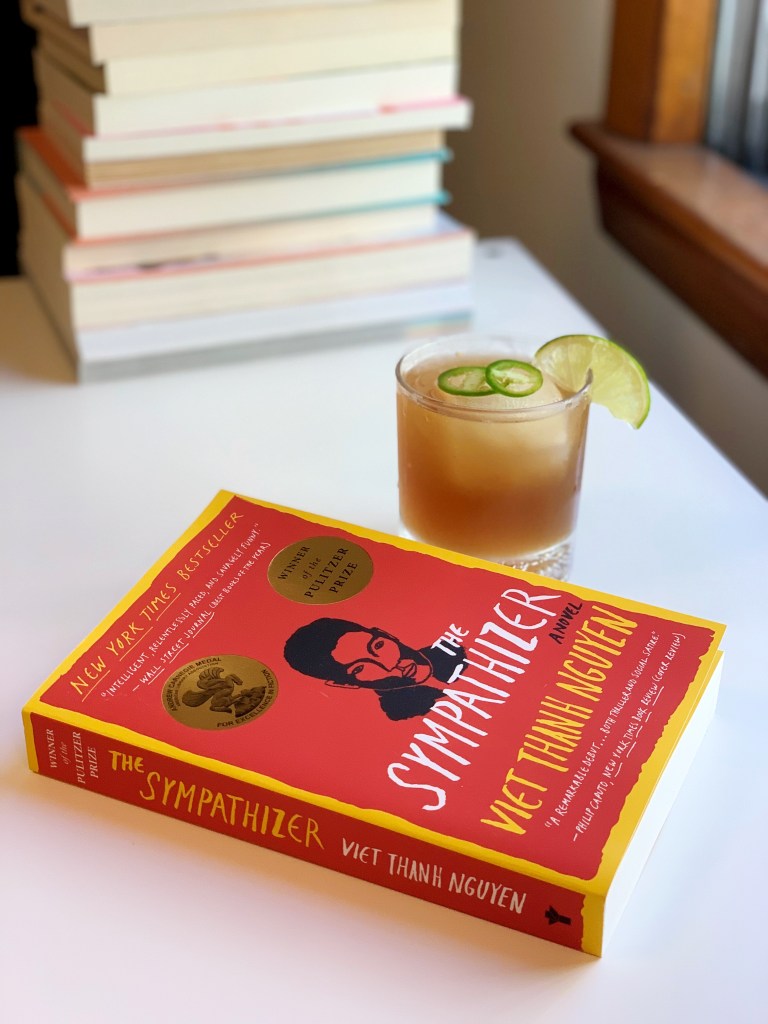
I am pairing this novel with my special version of the Dark ‘n’ Stormy – a drink with two main ingredients – to reflect the duality and inner conflict that the narrator embodies. With his mixed race background, the Captain prides himself as a “man of two minds” who can understand and manipulate the motivations of both his allies and adversaries. However, the longer he lives among his enemies in America, the more he questions his political allegiance, and ultimately, who he is as an individual. Once you begin sympathizing with another person, can you really remain unchanged? I couldn’t after finishing this novel.

FYI the sequel The Committed comes out in March! Until then, I HIGHLY recommend Viet Thanh Nguyen’s Nothing Ever Dies, which provides critical theory about the memory of war that will enrich your reading and analysis of The Sympathizer!

P.S. The secret to making this tasty drink is Kraken Rum — purely coincidental and not a reference to the story’s squid incident 🦑 😂


man of two minds

ingredients:
2 oz black spiced rum*
4 oz ginger beer
1 lime wedge

*for garnish: jalapeno slices

  1. combine the rum and ginger beer in a glass, and squeeze in the lime wedge
  2. stir the mixture
  3. add jalapeno slices and serve with ice

    *highly recommend using Kraken rum for your liquor base!

Another round, please! 🥂

You might also like:
Viet Thanh Nguyen’s Nothing Ever Dies: Vietnam and the Memory of War (2016)


Let’s discuss!

Finished the book? What did you think about it? Share your thoughts in the comments section below!

As we say in Vietnamese: “1, 2, 3, VÔ!” (cheers!) 🍻

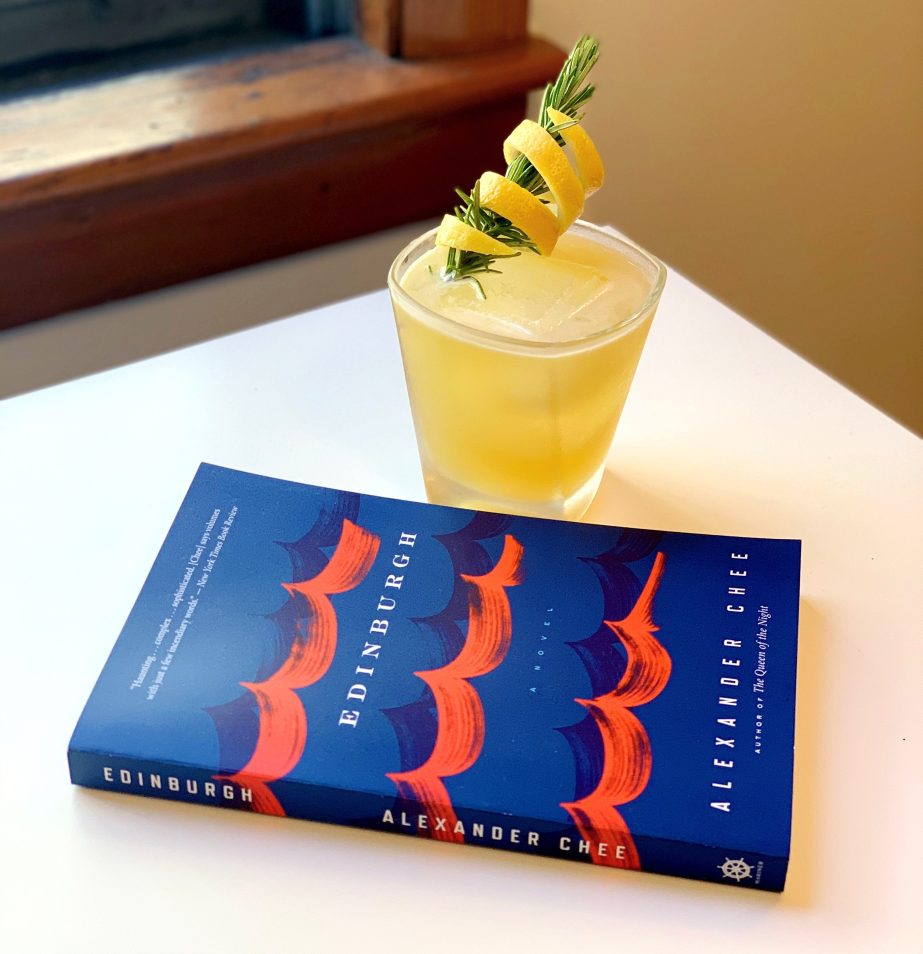
📖Edinburgh: 🍸flaxen

📖: Alexander Chee’s Edinburgh (2001)
🍸: flaxen

Why this book?

Edinburgh is HANDS DOWN one of the most beautiful works of prose that I’ve read. (Thank you, Alexander Chee, for gifting the world with your writing!!) This novel is a poignant and poetic coming-of-age story about a Korean-American boy named Fee, who joins a boys’ choir in Maine, where he meets and falls in love with his best friend, Peter. The choir is also where the director, Big Eric, sexually abuses several of the boys, including Peter, during an overnight summer camping trip. Much of the novel follows Fee into adulthood as he wrestles with his sexuality, faces shame and guilt for remaining a silent witness to Big Eric’s crimes, and grieves for the loss of Peter and his friends in the aftermath of their traumatic experience.

Much of the praise for this book cites how the simple, succinct language gives the story emotional depth and power — that what is not written expresses just as much as what Chee has put on the page. And I completely agree. There are many passages where I wanted to slow down, reread, and savor because the imagery was so vivid and lush.

For example, as the memory of Peter (and his death by burning) haunts Fee throughout his life, Fee’s narration becomes steeped with reoccurring images of fire and light — along with colors associated with flames: blue, red, and yellow. The novel also weaves in references to Western literature and Korean mythology, in which Fee seeks refuge, knowledge, and healing. This juxtaposition of Western and Korean influences is a nod to another layer of tension in the novel: not only does Fee grapple with his queer identity, but he also struggles to reconcile his bi-racial background as he grows up.

I finished the novel wanting to experience more of Chee’s writing. Since this novel is based on some of the author’s experiences, I am very much looking forward to reading Chee’s essays in How to Write an Autobiographical Novel to complement my reading of Edinburgh.


Why this drink?

The most tender moments in the novel are when Fee remembers Peter, often fixating on Peter’s white-blond, “candle-flame” hair — how this feature gave Peter a kind of emanating light that would draw you in. Of Peter, Fee recounts: “He walks and I feel the air come off him toward me, wherever we are…My mother calls him a towhead, the word, apparently, for that kind of hair, so pale, so bright, it seems to be what sunshine reminds you of. What do you want of him, I ask myself. I tell myself, to walk inside him and never leave. For him to be the house of me.”

And so, this yellow-hued cocktail is an ode to Fee’s love for Peter, the boy with the flaxen hair.

(This pairing uses Danny Shapiro’s Weathered Axe cocktail recipe from Punch with a few slight substitutions based on what I have available in quarantine.)


flaxen

ingredients:
1.5 oz bourbon
3/4 oz lemon juice
1/2 oz triple sec
1/2 oz Suze or an Americano wine
1/2 oz ginger syrup*

*for garnish: rosemary and lemon twist

  1. combine all ingredients in a shaker with ice and shake well
  2. serve in a chilled glass with ice
  3. garnish with a rosemary and a lemon twist

Pro-Tips:
*how to make ginger syrup: Pour sugar and water into a pan (using a 1:1 sugar-to-water ratio) and heat the mixture on the stove until it starts to bubble. Once tiny bubbles start to appear, immediately take the boiling syrup off the stove and pour it into the into a glass jar with freshly grated ginger. Cover the jar with airtight lid until cool. Strain out the ginger after liquid cools.

quarantine substitutes:
Bourbon: the original recipe calls for a 100-proof bourbon. I did not use a 100-proof bourbon, but it still tasted great. Use any whiskey of your choice.
Triple sec: the original recipe calls for a Combier, a brand of triple sec, so you can replace it with whichever triple sec you prefer — it doesn’t need to be an expensive brand (though Cointreau is a great choice)! I once omitted the triple sec by accident when mixing for friends, and it still tasted delicious (phew!).
Suze: I recently used Suze because I didn’t have Cocchi Americano available (what the original recipe called for), and because Suze’s bitter gentian flavor kind of mimics a substitution I’ve used in the past. In fact, I’ve never used Cocchi in this drink before. Instead, I’ve only used Short Path’s Americano Blanc, which is a cross between a vermouth and amaro, with white wine notes mixed with a gentian root flavor. In short, I think you can experiment with this ingredient – go for something a little bitter, dry, and white wine-like…maybe a dry white vermouth will do?!
No fresh ginger? You can try using ground ginger instead.


Another round, please! 🥂

You might also like:
Ocean Vuong’s On Earth We’re Briefly Gorgeous (2019)


Let’s discuss!

Finished the book? What did you think about it? Share your thoughts in the comments section below!
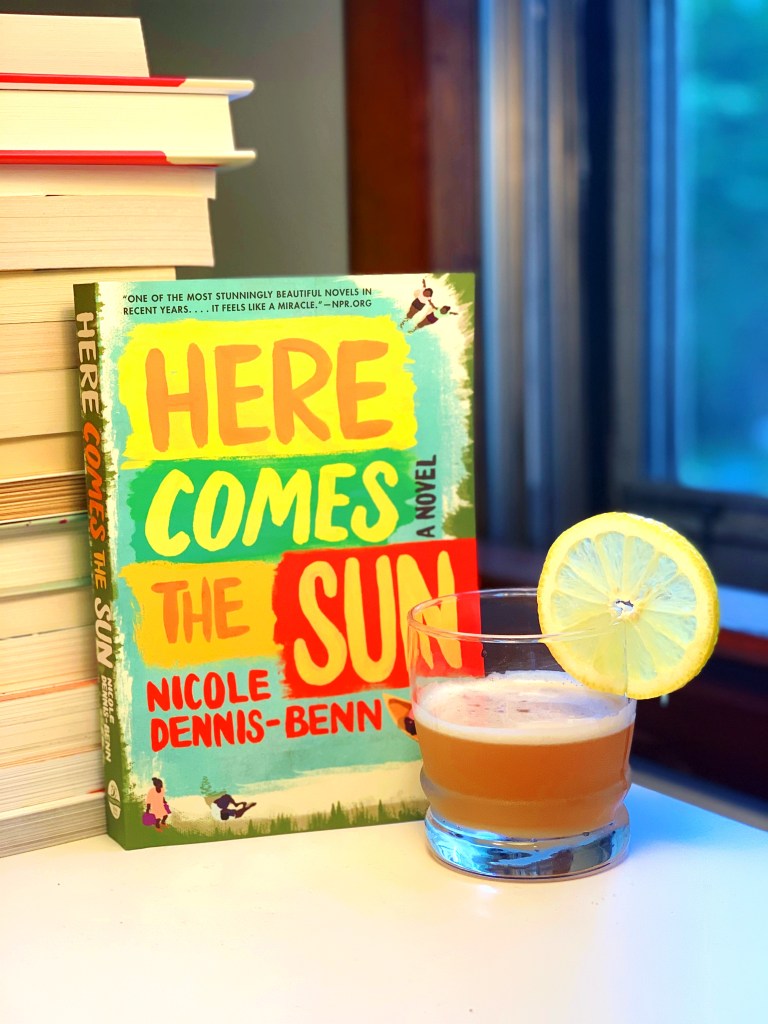
📖Here Comes the Sun: 🍸here comes the sun

📖: Nicole Dennis-Benn’s Here Comes the Sun (2016)
🍸: here comes the sun

Why this book?

Here Comes the Sun is a novel about working class women living near Montego Bay, Jamaica, a neighborhood on the brink of being dismantled by the rise of new luxury resorts — on the “other side of paradise,” according to the author. As white developers swoop in to evict the local people, the disparities continue to widen between the wealthy and working classes.

The novel centers on four women who Dennis-Benn depicts in a lovely and nuanced way: Margot (who engages in sex work at the hotel where she works to earn extra money for her family), Thandi (Margot’s younger sister who is expected to attend medical school), Delores (their mother, who sells souvenirs by the dock), and Verdene (Margot’s partner and outcast of the town). All hold dark secrets that lead them to betray each other in some way. Throughout the story, Dennis-Benn unravels these secrets at a brilliant pace, making the novel a quick page-turner, all the while continuously complicating the readers’ impression of these characters throughout the plot.

While the novel deals with difficult issues like colorism, poverty, economic exploitation, homophobia, violence, and sexual abuse, there are beautifully quiet moments of love and recognition between some of the characters, which the author depicts with great tenderness and care. In spite of these moments of possible joy, the novel’s somber closing left me wondering if these characters will someday be able to find themselves in the light and warmth of the sun.


Why this drink?

I found a beer-based cocktail recipe that is also called “Here Comes the Sun,” from DC-based restaurant & bar Roofers Union. It’s a bright, light, and crisp drink that accompanied me through this heavy, but beautifully written story 😭. I swapped out the rye for a bourbon and replaced the wheat beer with a blood orange shandy. Recipe credits to Travis Mitchell via liquor.com.


here comes the sun

ingredients:
1.5 oz whiskey
3/4 oz ginger syrup*
1/2 oz lemon juice
1 oz summer shandy

*for garnish: lemon wheel

  1. combine all ingredients, except for the beer, in a shaker with ice and shake well
  2. serve in a chilled glass
  3. top with beer – add more than 1 oz if desired
  4. garnish with a lemon wheel

Pro-Tips:
*how to make ginger syrup: Pour sugar and water into a pan (using a 1:1 sugar-to-water ratio) and heat the mixture on the stove until it starts to bubble. Once tiny bubbles start to appear, immediately take the boiling syrup off the stove and pour it into the into a glass jar with freshly grated ginger. Cover the jar with airtight lid until cool. Strain out the ginger after liquid cools.

quarantine substitutes:
Whiskey: the original recipe calls for rye whiskey, but I used a bourbon. Tasted great! Use whatever whiskey you like 🙂
Beer: the original recipe calls for a wheat beer, but I used a blood orange summer shandy. If you don’t have exactly these kinds of beer available, choose something light, crisp, and fruity. Yum!
No fresh ginger? You can try using ground ginger instead.


Another round, please! 🥂

You might also like:
Alexia Arthurs’s How to Love a Jamaican (2018)


Let’s discuss!

Finished the book? What did you think about it? Share your thoughts in the comments section below!
And check out these reviews to learn more about the book:

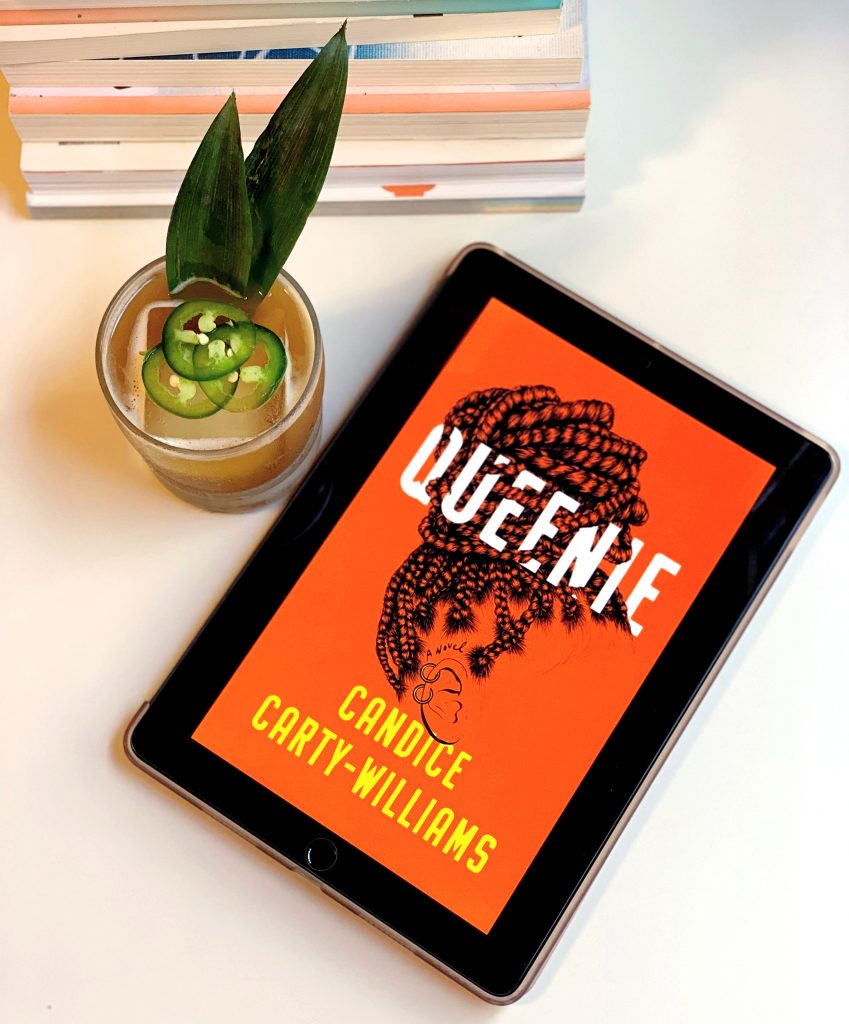
📖Queenie: 🍸royal

📖: Candice Carty-Williams’ Queenie (2019)
🍸: royal

Why this book?

Queenie’s story opens at a very awkward moment, which made me curious to read more about her right away. She’s at her gynecology appointment, texting her ex-boyfriend, when she finds out that she had a miscarriage. Feeling unmoored by her breakup, Queenie recounts the history of her relationship with her white ex, trying to figure out why they didn’t work out. Was it his inability to understand her? Was it her inability to open up to him? How much of it was due to the unresolved tensions of their interracial relationship? The book can be witty and humorous, but Queenie’s narrative is also deeply vulnerable as she struggles to start over again and take care of herself after her breakup, while living as a black woman in Britain.

Queenie’s story presents a perspective on what it’s like to live in the modern world as a woman of color, asking us to consider the challenges that arise at the intersection of race and gender. How do we deal with the effects of racism, misogyny, familial expectations, and mental health issues that accumulate when living in a predominantly white society? How do we navigate an interracial relationship? How do we find the courage and strength to choose ourselves first when we may not often be conditioned to do so?


Why this drink?

Interesting fact: Did you know that the pineapple used to be a symbol for luxury and power? In mid-17th century Europe, only royalty could afford buying a pineapple since they were extremely expensive to import from South America and difficult to cultivate in Europe. With that in mind, I chose to include pineapple in the drink to honor the queen that Queenie is.


royal

ingredients:
1.5 oz dark spiced rum
4 oz pineapple juice
1 oz lime juice
pinch of ground cinnamon

*for garnish: jalapeno slices, pineapple fronds and/or pineapple fruit

  1. combine all ingredients in a shaker with ice and shake well
  2. serve with large ice cube
  3. garnish with jalapeno slices and pineapple fronds/fruit

Recipe inspired by Boulder Locavore’s The Spicy Maiden Cocktail


Another round, please! 🥂

You might also like:
Chimamanda Ngozi Adichie’s Americanah (2013)


Let’s discuss!

Finished the book? What did you think about it? Share your thoughts in the comments section below!

📖Swing Time: 🍸dancing friend

📖: Zadie Smith’s Swing Time (2016)
🍸: dancing friend

Why this book?

The experience of reading Zadie Smith’s Swing Time felt like peeling back a giant onion. The novel is complex, nuanced, and multi-layered. It is a more of a collection of ideas and cultural analyses, than a plot-based story.

I started the book expecting a story about two best friends — the unnamed protagonist and Tracey. It starts that way, but I soon realized it was a lifelong reflection on a complicated relationship that quickly diverges into two paths determined by race, class, gender, and privilege.

While the girls’ friendship is shaped through dance, the book is more than just about their attachment to the art form. As we follow the protagonist in her job as an assistant to white pop star Aimee, I found that the novel leverages dance and music for a larger discussion of cultural appropriation, globalization, celebrity, race, and power.

The novel also reads like a tale of socioeconomic mobility, but it is really about the search for identity. The more time the protagonist spends working for Aimee, the more she distances herself from her roots of growing up poor in North London. But no matter where she goes or how much success she attains, she remains isolated, lost, and dissatisfied. She attaches her identity to the women around her, like Tracey and Aimee, but she can never quite grow into the woman she wants to be.

The novel closes with the protagonist watching Tracey dancing with her children in the same public housing building in which the girls grew up. This scene left me with questions that linger long after I finished the book. No matter where we go or what we become throughout our lives, do we always end where we begin? What kind of agency do we have in defining our own identities? Do we only become our true selves — our happiest selves — by returning to where we came from?


Why this drink?

This drink is a modified version of the Corpse Reviver 2, which Harry Craddock, (famous bartender who worked at the Savoy Hotel in London in the 1920’s and 1930’s), included in his 1930 The Savoy Cocktail Book.

Since the title of Zadie Smith’s novel references the 1936 Fred Astaire/Ginger Rogers movie of the same name, I wanted to pair it with a spin-off of a cocktail that was popular during the 1930’s. The Corpse Revivor 2 also originated in England, which serves as the setting of Smith’s novel during the protagonist’s childhood and adolescence.

The recipe I used is Alicia Perry’s Corpse Reviver No. 2. I adapted it with substitutes like white wine, triple sec, and star anise to replace some of the fancier spirits that I do not currently have access to in quarantine.


dancing friend

ingredients:
1 oz gin
3/4 oz sauvignon blanc
3/4 oz triple sec
3/4 oz lemon juice
1/4 oz simple syrup*

*for garnish: star anise and lemon twist/wheel

  1. combine all ingredients in a shaker with ice and shake well
  2. serve in a chilled glass
  3. garnish with a lemon twist/wheel and star anise

Pro-Tips:
*how to make simple syrup: Pour sugar and water into a pan (using a 1:1 sugar-to-water ratio) and heat the mixture on the stove until it starts to bubble. Once tiny bubbles start to appear, immediately take the boiling syrup off the stove and pour it into the into a glass jar. Cover the jar with airtight lid until cool.

quarantine substitutes:
If you don’t have sauvignon blanc, use whatever other dry white wine you have on hand. The original recipe calls for Lillet Blanc. Similar spirits like Cocchi Americano and Short Path’s Americano Blanc should work, too.
If you don’t have triple sec, Cointreau will do! The original recipe calls for Cointreau anyway, but I think other orange based liqueurs will do, like Grand Marnier or curaçao.
If you don’t have star anise, but have anise extract, a drop or two (to taste) could serve as an alternative. The original recipe calls for absinthe to rinse the glass. Since this is such a small amount, it’s really to give the drink another dimension of flavor and scent. If you don’t have absinthe or a sub for it, omit this ingredient altogether.


Another round, please! 🥂

You might also like:
Chimamanda Ngozi Adichie’s Half of a Yellow Sun (2006)


Let’s discuss!

Finished the book? What did you think about it? Share your thoughts in the comments section below!

And check out these reviews to learn more about the book:

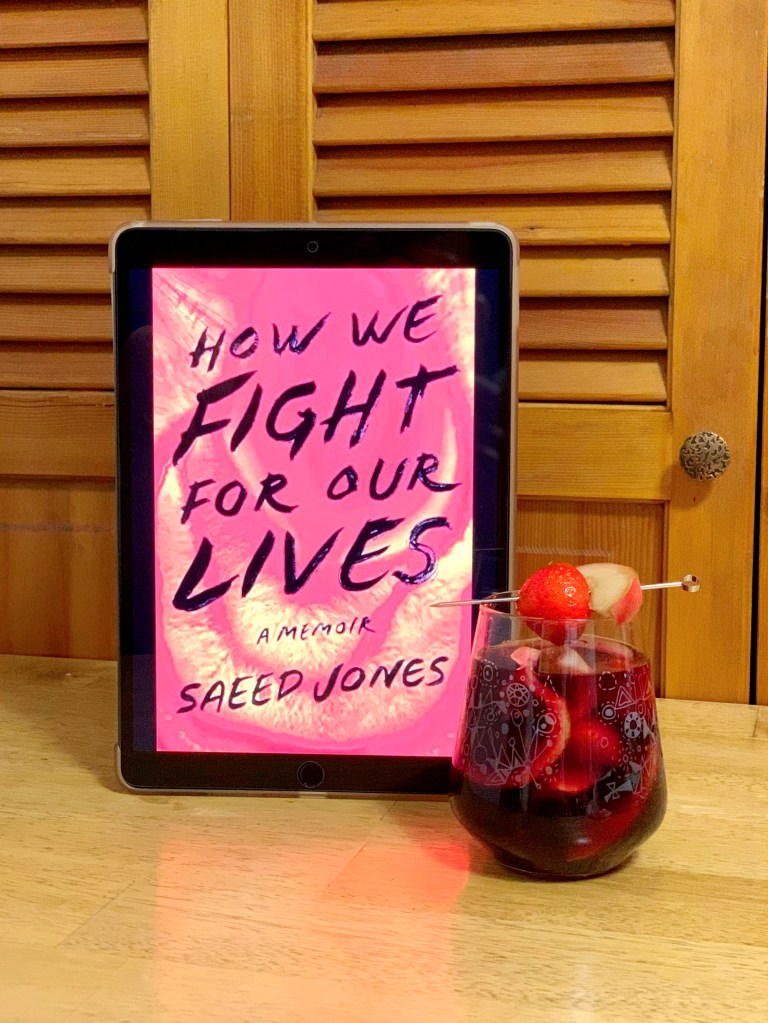
📖How We Fight for Our Lives: 🍸sangria in spain

📖: Saeed Jones’s How We Fight for our Lives (2019)
🍸: sangria in spain

Why this book?

Today is the last day of Pride Month, so I’m recommending Saeed Jones’ How We Fight for Our Lives, a poetic coming-of-age memoir that follows Jones’ experiences growing up as a gay black boy in the South through his early adulthood, navigating his relationship with his mother. In his story, Jones fights not just for physical survival as a black, gay man, but he also fights to claim his right to be himself at the intersection of his marginalized identities. Jones’ struggle for agency and power are intimately tied to his attempts to define himself in a world that is anti-black and anti-gay.

The book is also about Jones’ mother as it is about him. It begins with her and ends with her, despite Jones’ efforts to detach himself from his mother in his journey in finding himself. The memoir aptly closes with a reflection on how “our mothers are why we are here.” They are why we are.


Why this drink?

I made this drink because Jones shares bottles of sangria with a new friend Esther, who he meets on a visit to Barcelona. They tour museums, go to the beach, share meals together, and mutually realize that their mothers are the reason why they both decided to take this trip to Spain. I wanted to highlight this moment of discovery, hope, and comfort that these two individuals found towards the end of the story.


sangria in spain

ingredients:
1 bottle red wine
4 oz brandy*
1 oz maple syrup*
1 orange
1 lemon, thinly sliced into rounds
3 cups of your favorite seasonal fruit, chopped up*

  1. cut the orange in half. juice one half and thinly slice the other half into rounds.
  2. red wine, brandy, orange juice, and maple syrup in a large pitcher or carafe, and mix well (or shake well if your pitcher/carafe has a lid)
  3. add the chopped fruit, and lemon and orange slices to the mixture. let the flavors infuse for at least half an hour before serving.
  4. you may leave it in the fridge to chill for 2-8 hours, if desired.
  5. serve with ice, optional.

quarantine substitutes:
If you don’t have brandy, I’ve read that you can replace it with a black spiced rum. I haven’t tried that but that sounds like it could be really interesting!
If you don’t have maple syrup, you can sub with a simple syrup made with regular white, granulated sugar or demerara sugar. You can also simply mix in white or brown sugar without making a syrup.
Seasonal fruits: use anything you’d like and/or whatever is available. I used peaches, strawberries, and blueberries because it’s summer. Apples, pears, nectarines, and pineapples also work. You can also add more or less lemon/orange to taste. The 3 cups measurement of chopped fruit is just an estimate — add accordingly based on your love for fresh fruit!

Thanks to Cookie + Kate for their Best Sangria Recipe !!


Another round, please! 🥂

You might also like:
Kiese Laymon’s Heavy (2018)


Let’s discuss!

Finished the book? What did you think about it? Share your thoughts in the comments section below!
And check out these reviews to learn more about the book:

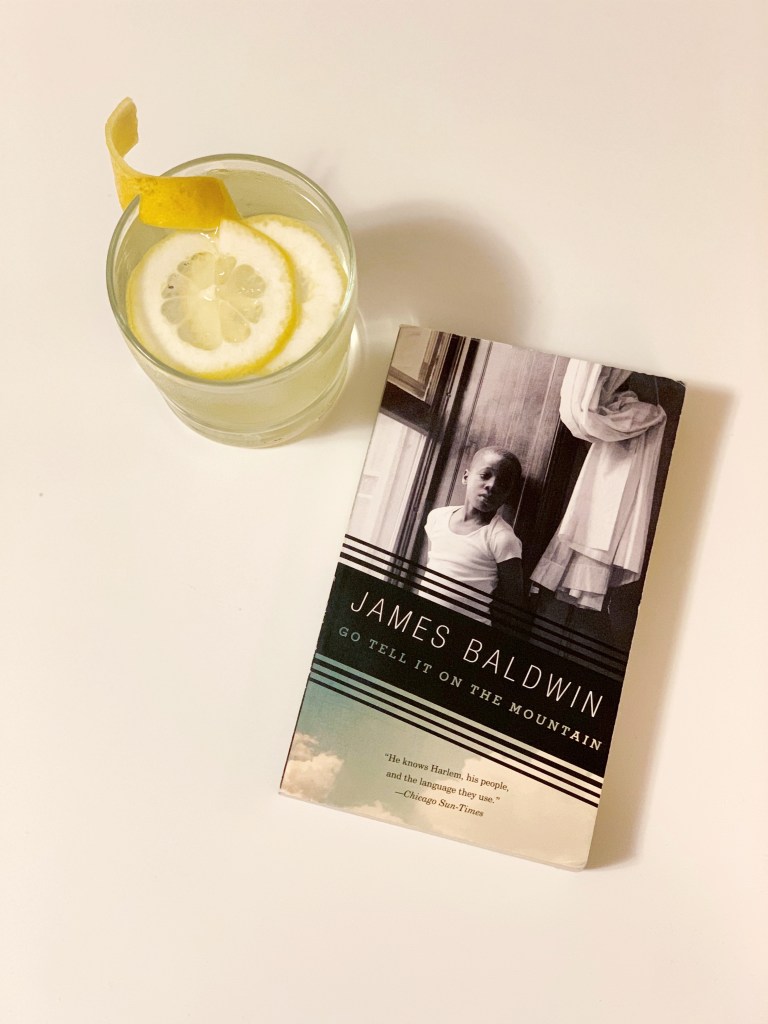
📖Go Tell It on the Mountain: 🍸fourteen

📖: James Baldwin’s Go Tell It On the Mountain (1953)
🍸: fourteen

Why this book?

Go Tell It on the Mountain is James Baldwin’s first novel, published in 1953. It begins with the main character John’s fourteenth birthday, a day when John begins to question his faith, sexuality, and destiny as a preacher.

Much like the novel’s protagonist, James Baldwin also became a preacher at age 14, after a life-changing prayer meeting at his church. However, after some years, he became disillusioned with Christianity, left the ministry, and at age 24, moved to Paris to continue writing and to experience life outside of the racist confines of America.

Baldwin returned to the US in the late 1950’s and became a prominent voice and essayist analyzing issues of race, power, and class during the civil rights movement. As a gay man, Baldwin also wrote stories that explored ideas of queer sexuality and masculinity. His works were also influential in the gay rights movement, in addition to the civil rights movement.

Even almost seventy years after his first publication, much of Baldwin’s writing and social analyses remain extremely contemporary. While The Fire Next Time is resurging in popularity today, I thought it would be interesting to go back to Baldwin’s first work, to see where he began as a writer and understand how his ideas on race, class, sexuality, and faith developed over the course of his career as a writer and activist.


Why this drink?

The second section of this book is titled “The Prayers of the Saints,” which gives readers insight into the history and perspective of John’s family members. As a nod to this section of the book, this cocktail will feature elderflower liqueur as a key ingredient (St. Germain and St. Elder are two brands that produce this spirit).


fourteen

ingredients:
3 oz dry white wine*
2 oz elderflower liqueur
1 oz club soda

for garnish:
lemon twist

  1. mix all ingredients in a mixing glass with ice.
  2. pour into collins glass with ice.
  3. garnish with lemon twist and add a splash of lemon juice (optional).

Pro-tips:
*I used sauvignon blanc in this recipe, but you can also use a pinot grigio or riesling. The recipe also works with a brut champagne.

quarantine substitutes:
If you don’t have elderflower liqueur, you can also use an alcohol-free elderflower cordial or syrup (sold at Ikea and Amazon).
If you don’t have club soda, you may also use a plain or citrus-flavored sparkling water (i.e., lemon) or ginger beer/ale may be a possible alternative.

This recipe was inspired by The Spruce Eats’ Elderflower Cocktail Recipe With Champagne.


Another round, please! 🥂

You might also like:
Maya Angelou’s I Know Why the Caged Bird Sings (1969)


Let’s discuss!

Finished the book? What did you think about it? Share your thoughts in the comments section below!