
📖The House on Mango Street: 🍸home in the heart

📖: Sandra Cisneros’s The House on Mango Street (1983)
🍸: home in the heart

Why this book?

Cisnero’s novel is about a young girl named Esperanza, who longs for a house of her own, far away from her family’s house on Mango Street in Chicago. She dreams of going somewhere else where she’s free to be herself, to be an artist, to be unmoored from the expectations of what it means to be a girl in her Latinx neighborhood.

But no matter how far Esperanza will eventually go, the house on Mango Street will always be a part of her. “One day I’ll own my own house,” she muses, “but I won’t forget who I am or where I came from…because I know how it is to be without a house…I have gone away to come back. For the ones I left behind. For the ones who cannot out.”

I was really swept up in Cisnero’s evocative portrayal of the aspirations, observations, and concerns of a girl in the process of discovering who she wants to become. I enjoyed that the novel was written in an unusual way (through a series of vignettes), and Cisneros has such a beautiful way of painting a scene with brevity and simplicity.

Through Esperanza’s reflections on the purpose and direction of her life, Cisneros poses the question of whether the work that we do (and the art that we create) should be done in the service of others. If yes, then what would this look like?

I was just finishing this book when I heard of Ruth Bader Ginsburg’s passing, which made these questions even more timely and relevant. When asked by the Stanford Daily in 2017 what advice she has for young people, she said, “Whatever paid work you pursue, do something outside of yourself that you really care about, that you are passionate about. Whether it’s the environment [or] discrimination. Do something that will make life a little better for people less fortunate than you.” ❤️️ RIP, RBG


Why this drink?

For this pairing, I made a mango-based drink 🥭 with Campari as a nod to Esperanza’s red house on Mango Street. 🏠


home in the heart

ingredients:
1.25 oz bourbon
0.25 oz Campari
2 oz mango juice
0.25 oz fresh lime juice
pinch of cayenne pepper

for garnish:
Tajin seasoning, or a mix of cayenne pepper, black pepper, and salt

  1. combine all ingredients in a shaker and shake with ice
  2. use a wedge of lime to wet the rim of the glass, then dip your rim into the Tajin seasoning
  3. pour mixture into the glass, and serve with ice

Another round, please! 🥂

You might also like:
Maxine Hong Kingston’s The Woman Warrior (1976)

Let’s discuss!

Finished the book? What did you think about it? Share your thoughts in the comments section below!
📖The Woman Warrior: 🍸silver bolt

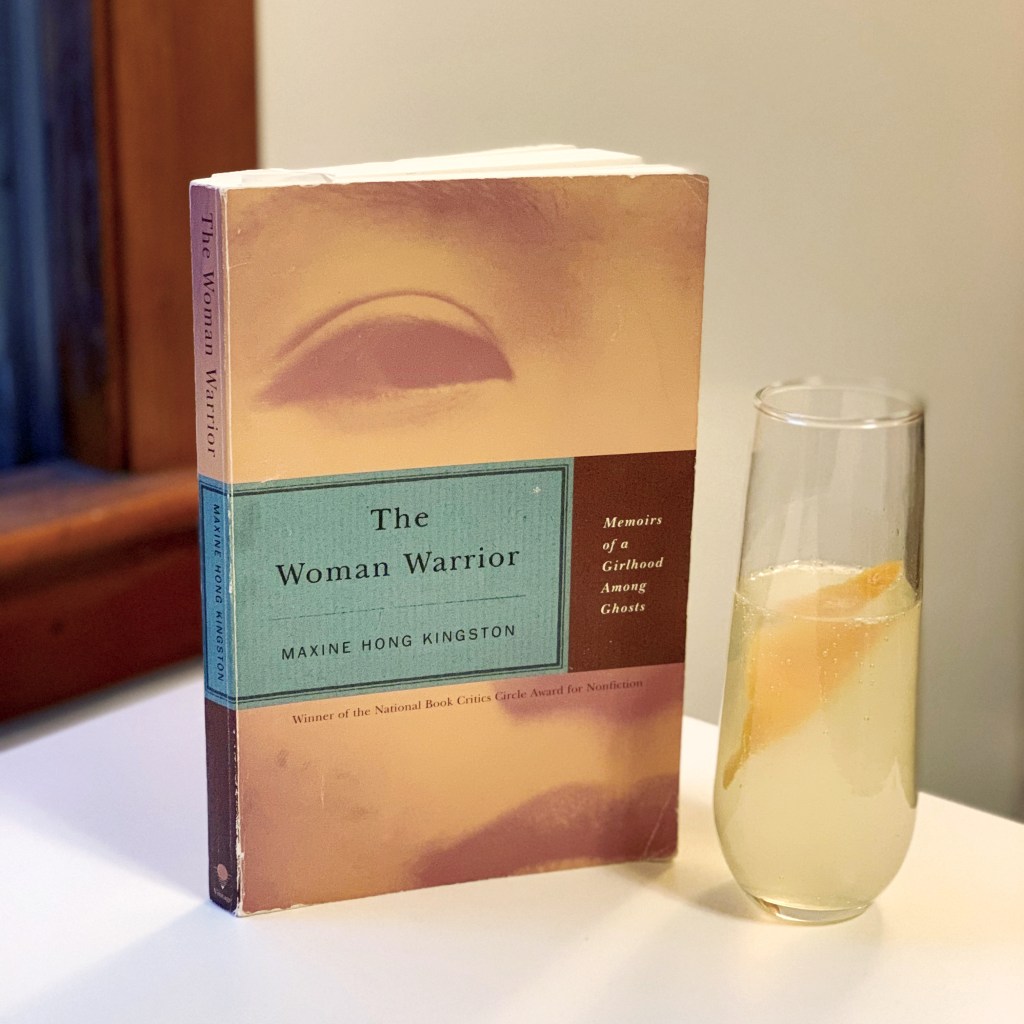
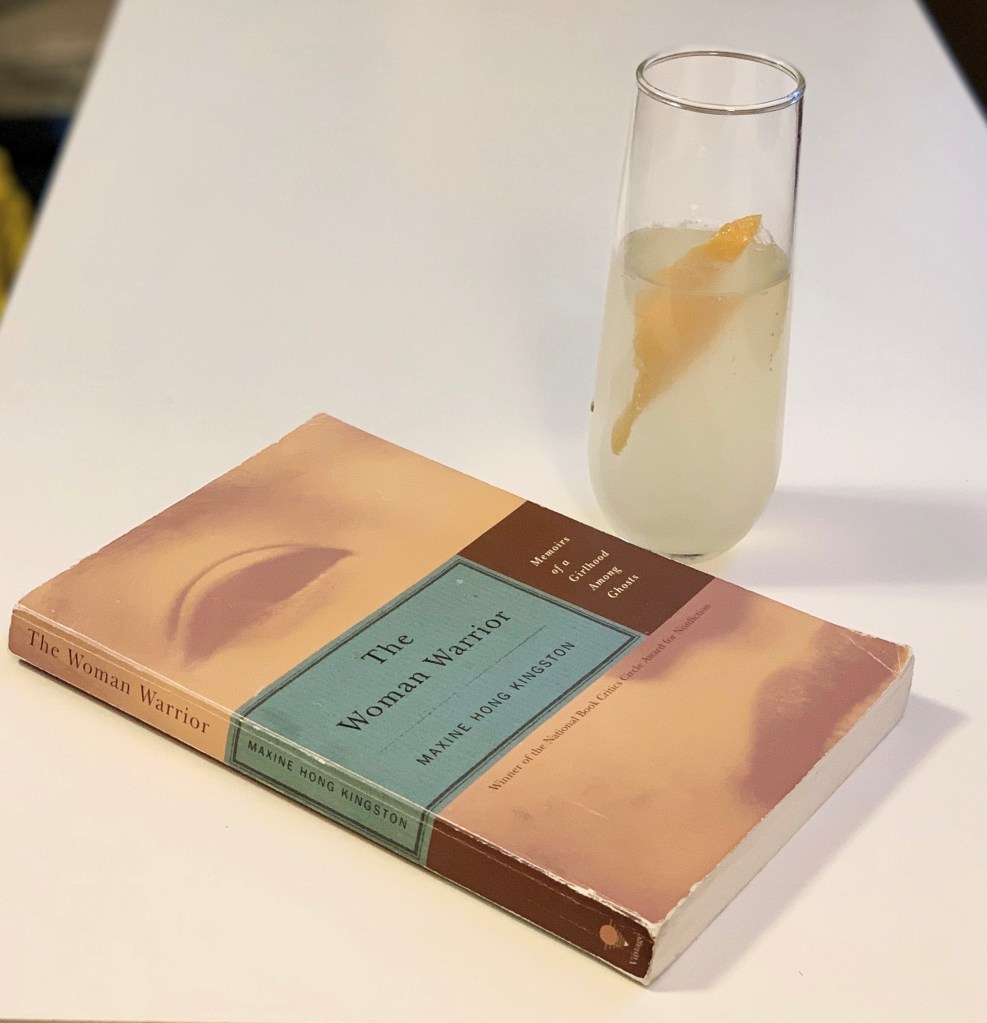
📖: Maxine Hong Kingston’s The Woman Warrior (1976)
🍸: silver bolt

Why this book?

The Woman Warrior holds a special place in my reading life. I first read it in college for an Asian American literature class, which introduced me to a world of #ownvoices stories that helped me feel seen for the first time.

In her book, Kingston recounts her upbringing as a Chinese American girl in California. Rereading it gave me a newfound appreciation for Kingston’s craft. Defying the bounds of memoir-writing, Kingston seamlessly blends fact and fiction – incorporating myths and fantastical images – to the point where I wasn’t sure how much of her stories were grounded in memory or pure imagination. I love that the book challenges me to consider whether there’s really a difference between what we remember and what we imagine.


Why this drink?

In the chapter “White Tigers,” Kingston as a young girl imagines herself becoming the great swordswoman, Hua Mulan, as a way to process her experiences growing up female and Chinese in the context of her family and community. In her/Mulan’s warrior training, she describes her ability to make a sword appear out of the sky, like a “silver bolt in the sunlight,” signaling her coming of age as a warrior woman.

So for this pairing, I made a silvery-gold drink in a stemless flute to emulate the shape of a sword. I also incorporated grapefruit and lychee flavors because these fruits make an appearance in Kingston’s book.


And speaking of Mulan 🧐 I want to learn more about other adaptations of her story and understand how it has evolved over time, so I’m planning to check out Lan Dong’s book Mulan’s Legend and Legacy in China and the United States.

For a quick reference to other versions of Mulan besides the new Disney film, check out this NYT article: “Mulan, a Most Adaptable Heroine: There’s a Version for Every Era.”


silver bolt

ingredients:
1 oz vodka
0.5 oz lychee liqueur
0.5 oz fresh grapefruit juice
1 tsp simple syrup
4 oz champagne

for garnish:
grapefruit twist

  1. combine all ingredients, except for the champagne, in a shaker and shake with ice
  2. strain into a stemless flute glass
  3. top off with chilled champagne
  4. garnish with a grapefruit twist

Another round, please! 🥂

You might also like:
Amy Tan’s The Opposite of Fate: Memories of a Writing Life (2004)

Let’s discuss!

Finished the book? What did you think about it? Share your thoughts in the comments section below!
And check out these articles to learn more about the book and the writer:

📖Severance: 🍸the city

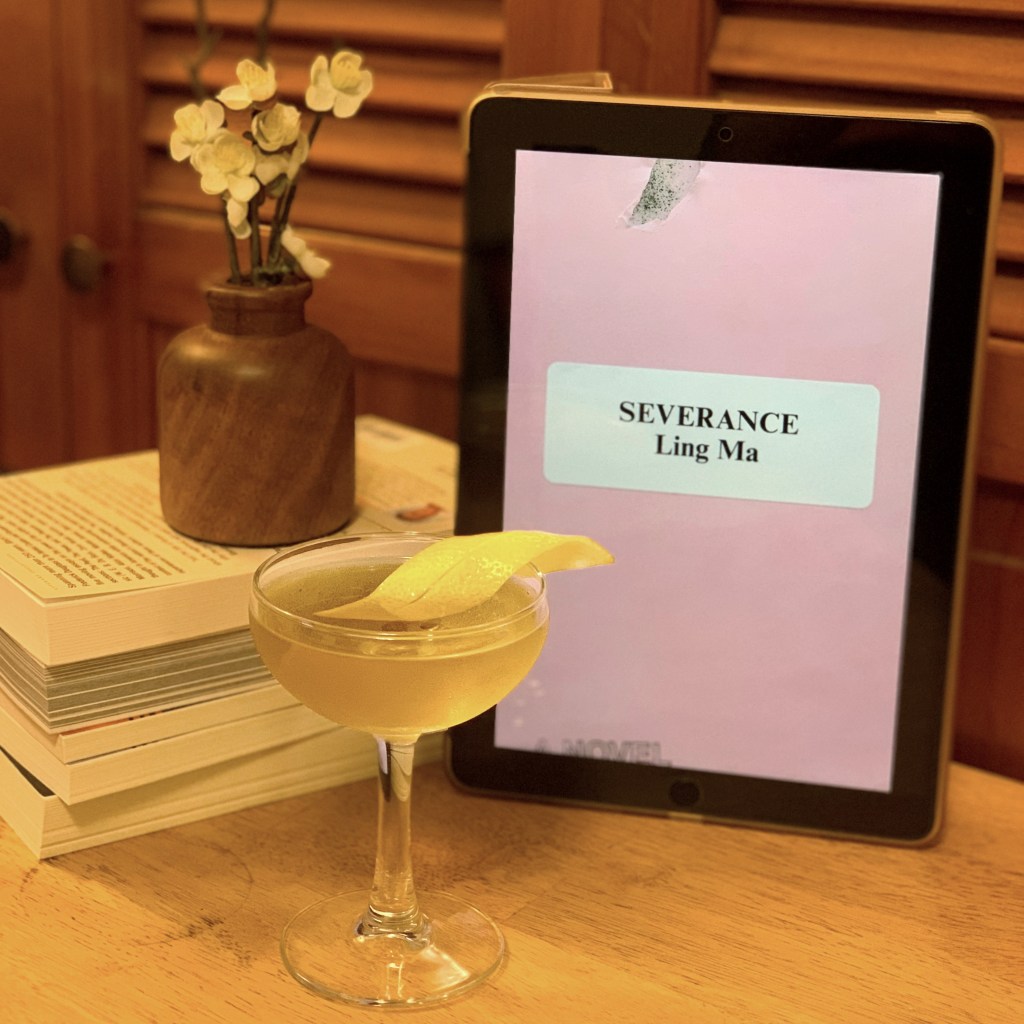
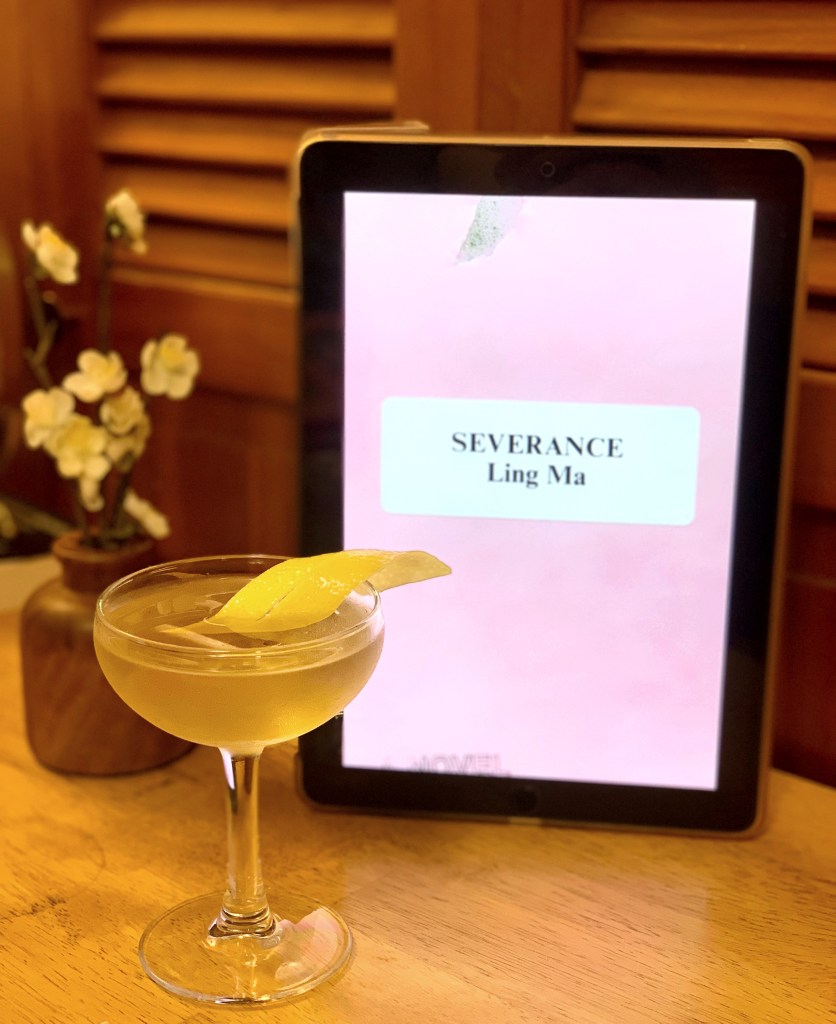
📖: Ling Ma’s Severance (2018)
🍸: the city

Why this book?

Published in 2018, Severance is a novel about NYC resident Candance Chen who becomes one of the few survivors of the Shen Fever pandemic, caused by a flu-like virus initially detected in China.

Like Candace, I was living in NYC when COVID19 began to appear, so reading the novel’s portrayal of Shen Fever’s spread felt eerily prescient – from its descriptions of the public’s skepticism and confusion; to the shutdown of businesses; to the residents’ flight out of the city.

But what felt most unsettling about the book was its exploration of late-stage capitalism and its absurdities. In the novel, the virus turns people into zombies who perform repetitive, mind-numbing actions until they waste away. Is this a metaphor for what capitalism does to us – trapping us in an endless loop of work, production, consumption, and desire for more than what we already have?

One of the story’s details that stuck with me the most was Candace’s decision to outsource a manufacturing job to a Chinese factory, even though she knew that the job would cause real harm to the workers’ health. This made me reflect on how capitalism works like a trick mirror: by exploiting others in the global market, we think we gain an economic advantage. But participating in this capitalist exploitation also re-creates inequalities at home, widening a wealth gap that underpins a system of racial disparities. With Labor Day approaching, I’m thinking about my role in the global economy: what effect does my work have on others and how do I spend my money? Can it be possible for anyone to truly live outside of capitalism?  


Why this drink?

As a toast to the novel’s setting in NYC, I am pairing Severance with a dry version of the Manhattan cocktail. I used bourbon instead of rye, and because white vs. red vermouth was used, I garnished with a lemon peel instead of a cherry. The 2:1 ratio of whiskey to vermouth that I used aligns with the classic sweet Manhattan made with red vermouth.


the city

ingredients:
2 oz bourbon
1 oz dry vermouth
2 dashes orange bitters

*for garnish: lemon peel

  1. combine the all ingredients in a mixing glass, and stir well with ice
  2. serve in a chilled glass, straining out the ice
  3. garnish with a lemon peel

Pro-Tips:
*whiskey alternative: you may use a rye whiskey instead of bourbon for a drier, spicier taste.
*vermouth alternative: you may use red (sweet) vermouth to make a sweet version of this Manhattan cocktail. Or you may use a 50/50 blend of red and white vermouth to make a “Perfect” Manhattan.
*bitters alternative: you may use Angostura bitters instead of orange bitters. I chose orange bitters for a brighter, citrus-y taste.
*garnish alternative: if you are using sweet vermouth instead of dry vermouth, garnish with a maraschino cherry vs. lemon peel.


Another round, please! 🥂

You might also like:
Charles Yu’s How to Live Safely in a Science Fictional Universe (2010)


Let’s discuss!

Finished the book? What did you think about it? Share your thoughts in the comments section below!
And check out these reviews to learn more about the book: